Plant Minsawi, Kuala Kangsar4 more
Plant Minsawi, Kuala Kangsar Retrofit from Aug 2024 Stations 8 Figures dated 2026-05-25 Figures Published, not live

A.I. Based Smart Palm Oil Mill

Eight stations. One mill. Nothing torn out.

Software that reads eight stations and moves the steam flow and the oil drainage itself. Fitted to a 41-year-old mill while it kept running — bar one seven-hour Sunday window (The Edge Malaysia, 30 Dec 2024). The Star called it the world’s first palm oil mill to adopt AI.

Launched by the Minister of Plantation & Commodities — 19 Nov 2024, Minsawi Industries, Kuala Kangsar
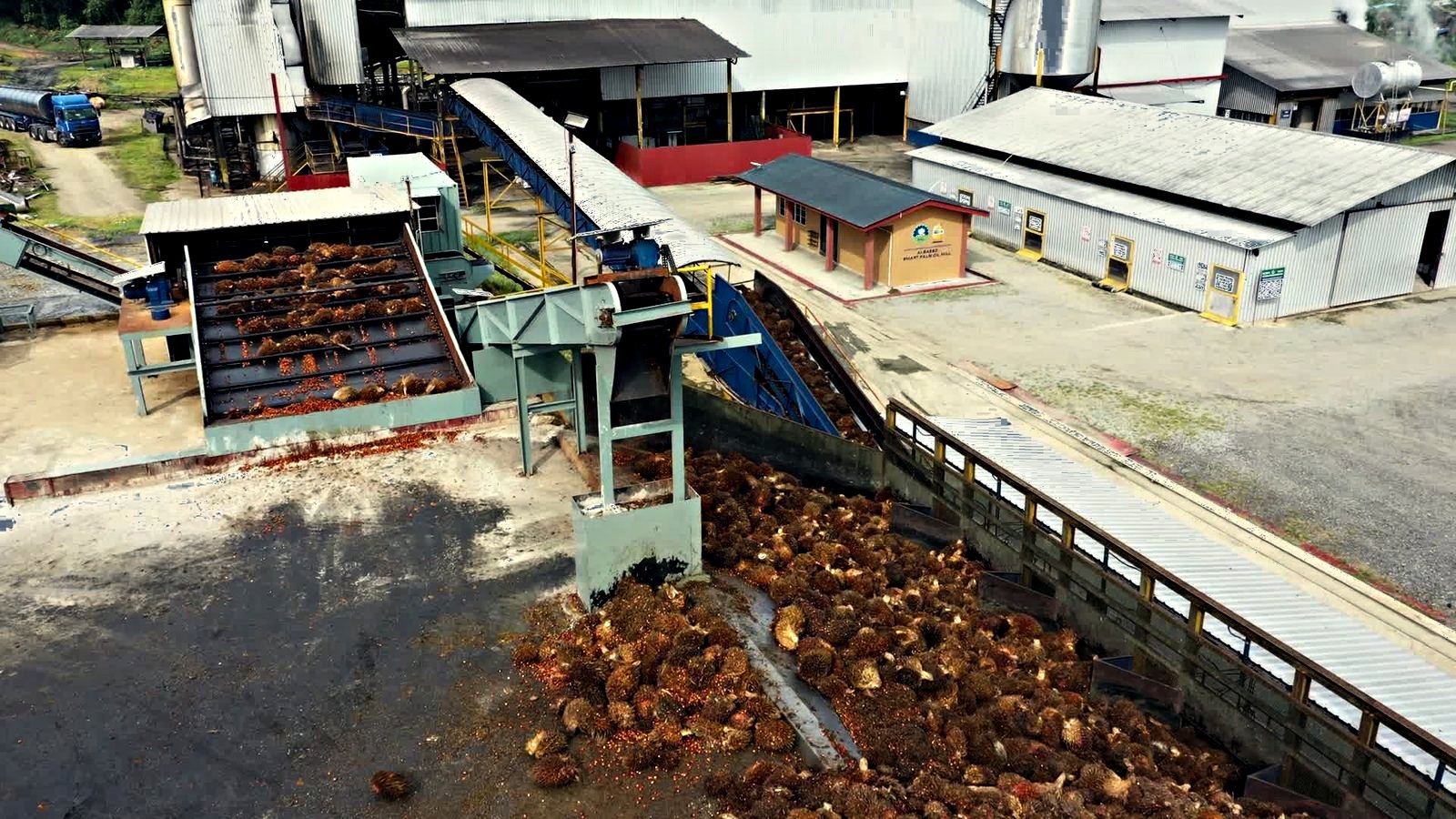
Aerial view of the mill's fruit reception area: fresh fruit bunches heaped in the ramp hopper and riding an inclined conveyor up into the mill house, with a delivery lorry, a small site office and the process buildings around it.
Minsawi Industries, Kuala Kangsar, Perak  //  FFB reception, existing plant

What it did

The mill we retrofitted reported three numbers.

Oil extraction rate
+1.17 pp

17.85% to 19.02%, out of the same fruit.

Mill crew
53%

66 people down to 31 to run the plant.

Breakdown hours
75%

12.21 hours a month down to 3.08.

Minsawi Industries, Kuala Kangsar — one mill, on its own baseline. Our figures, relayed in The Edge Malaysia, 25 May 2026. See how each one was measured →

The stations

What gets instrumented, station by station.

Eight stations. A station is a place in the plant; a module is software inside MyPalm.
Station 1 / 8
FFB RAMP & WEIGHBRIDGE
Platform MYPALM
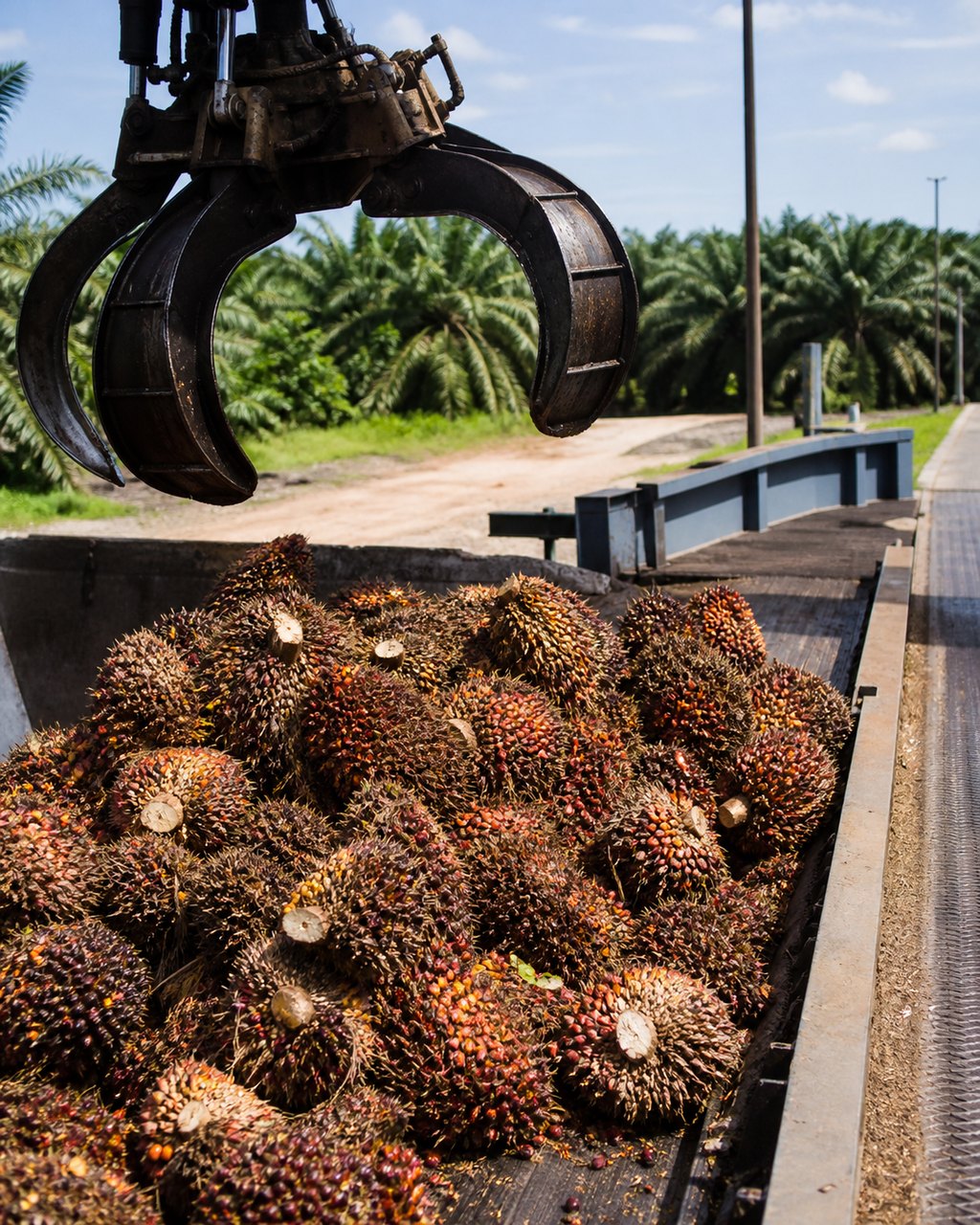
A grapple crane lifting fresh fruit bunches onto a mill reception ramp, a heaped load below it and mature oil palms along the boundary behind.
01

FFB Ramp & Weighbridge

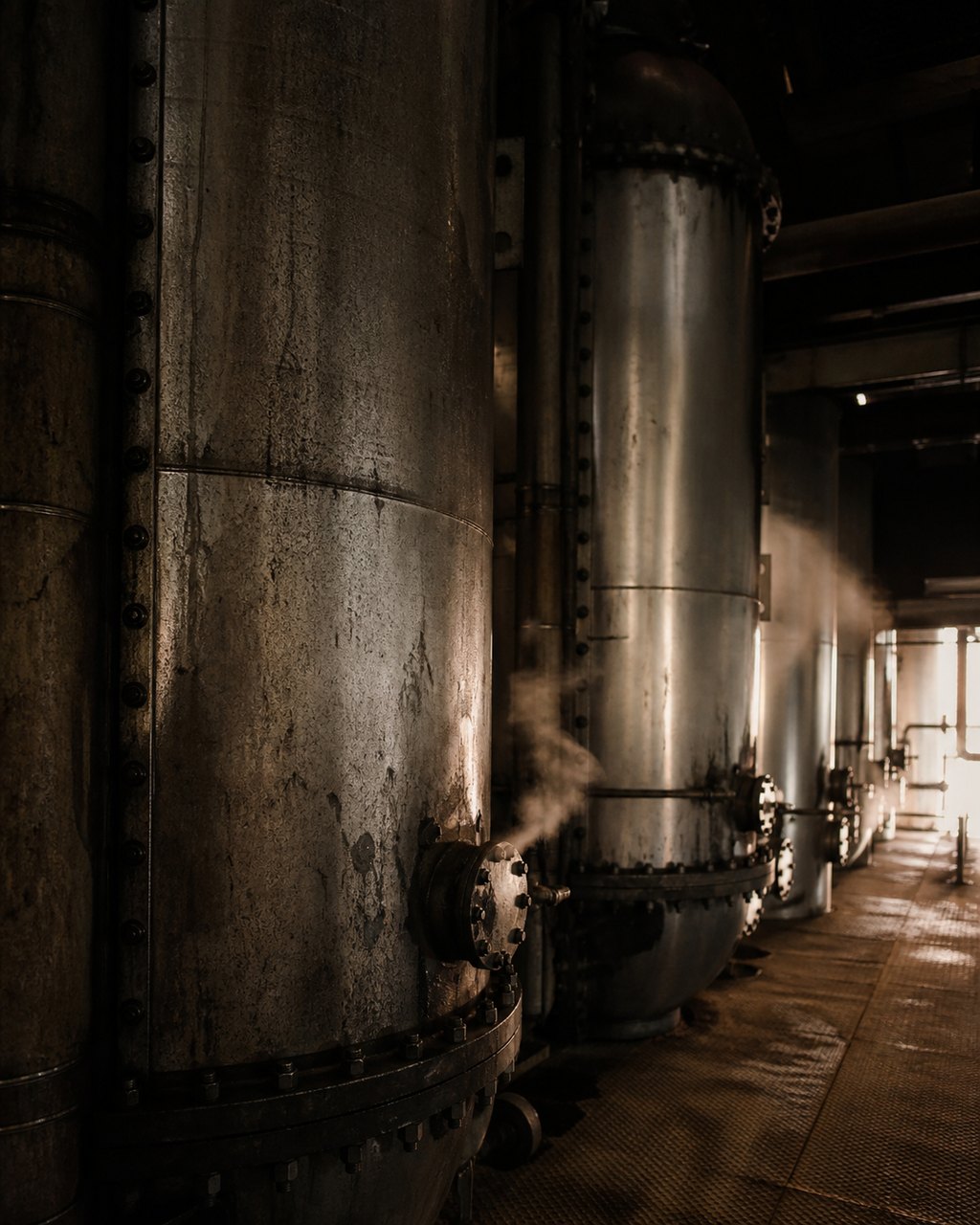
A row of tall riveted sterilizer vessels inside a mill, steam venting from a bolted flange, steel grating underfoot and warm light down the gangway.
02

Sterilizer

Remote monitoring via MyPalm
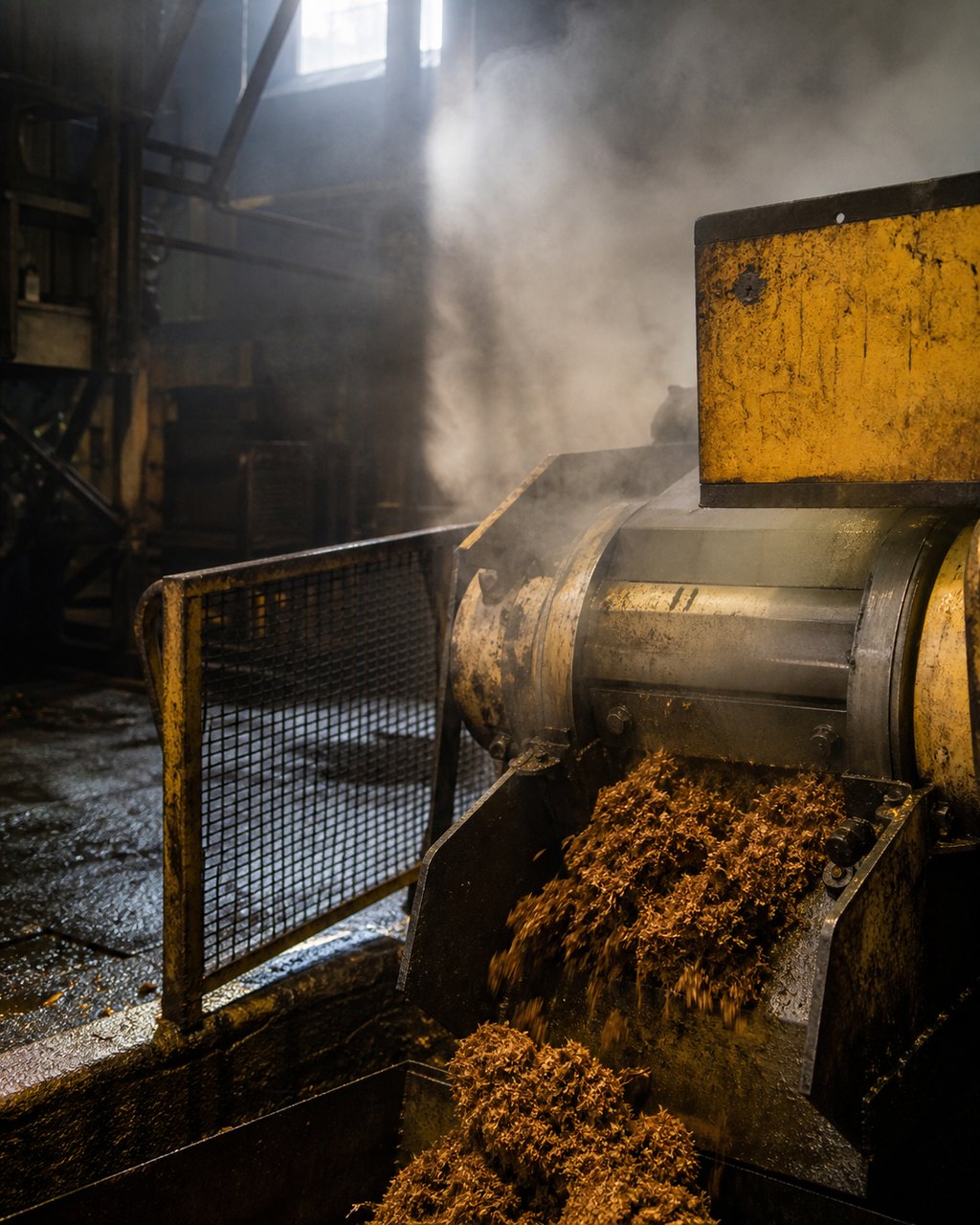
A screw press in operation, pressed fibre extruding in a thick mat from the outlet with steam rising off it and a yellow machine guard above.
03

Digester & Press

Remote monitoring via MyPalm
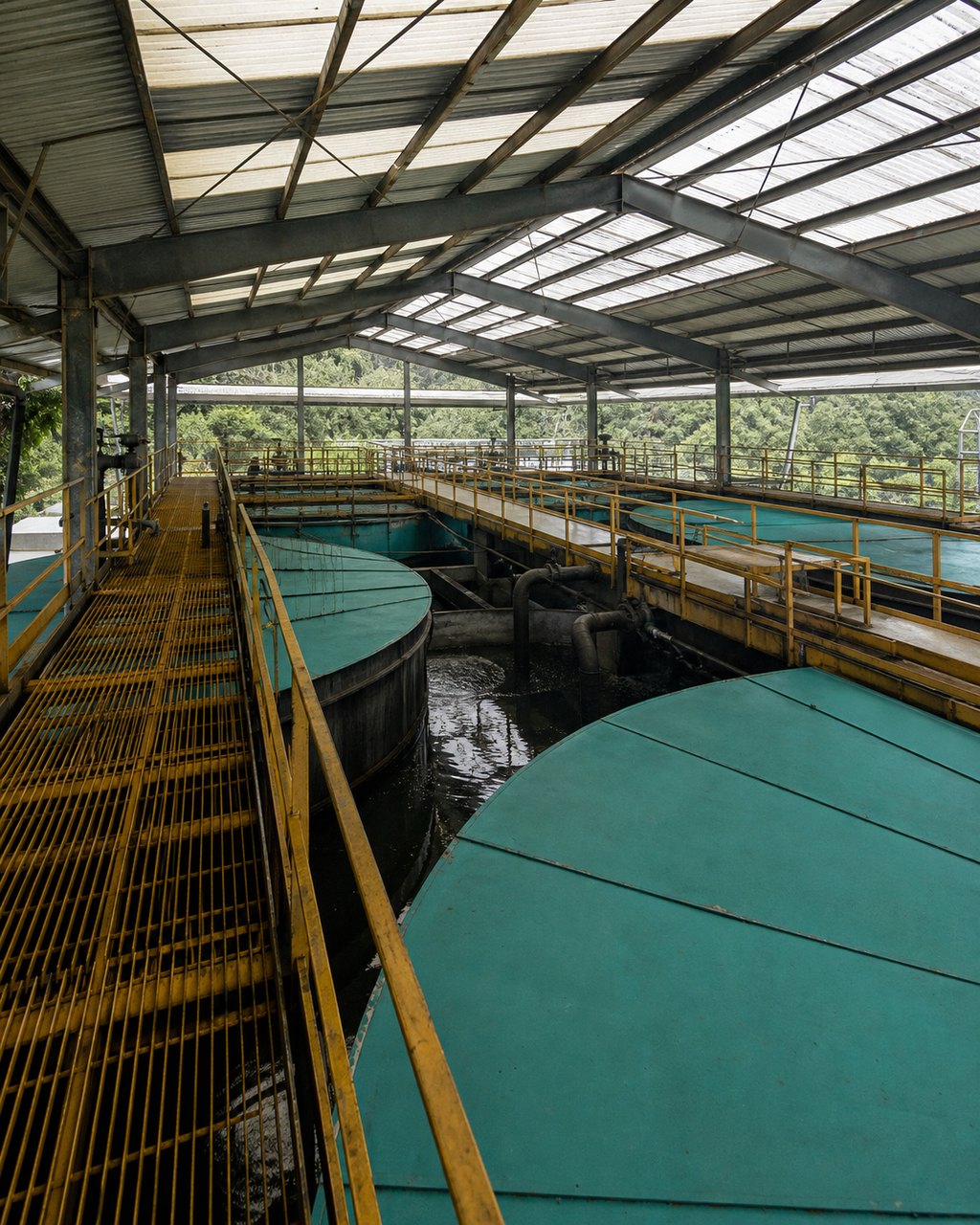
Clarification tanks under a mill roof, their green covers and steel walkways receding into the shed with daylight coming through the roof lights.
04

Clarification

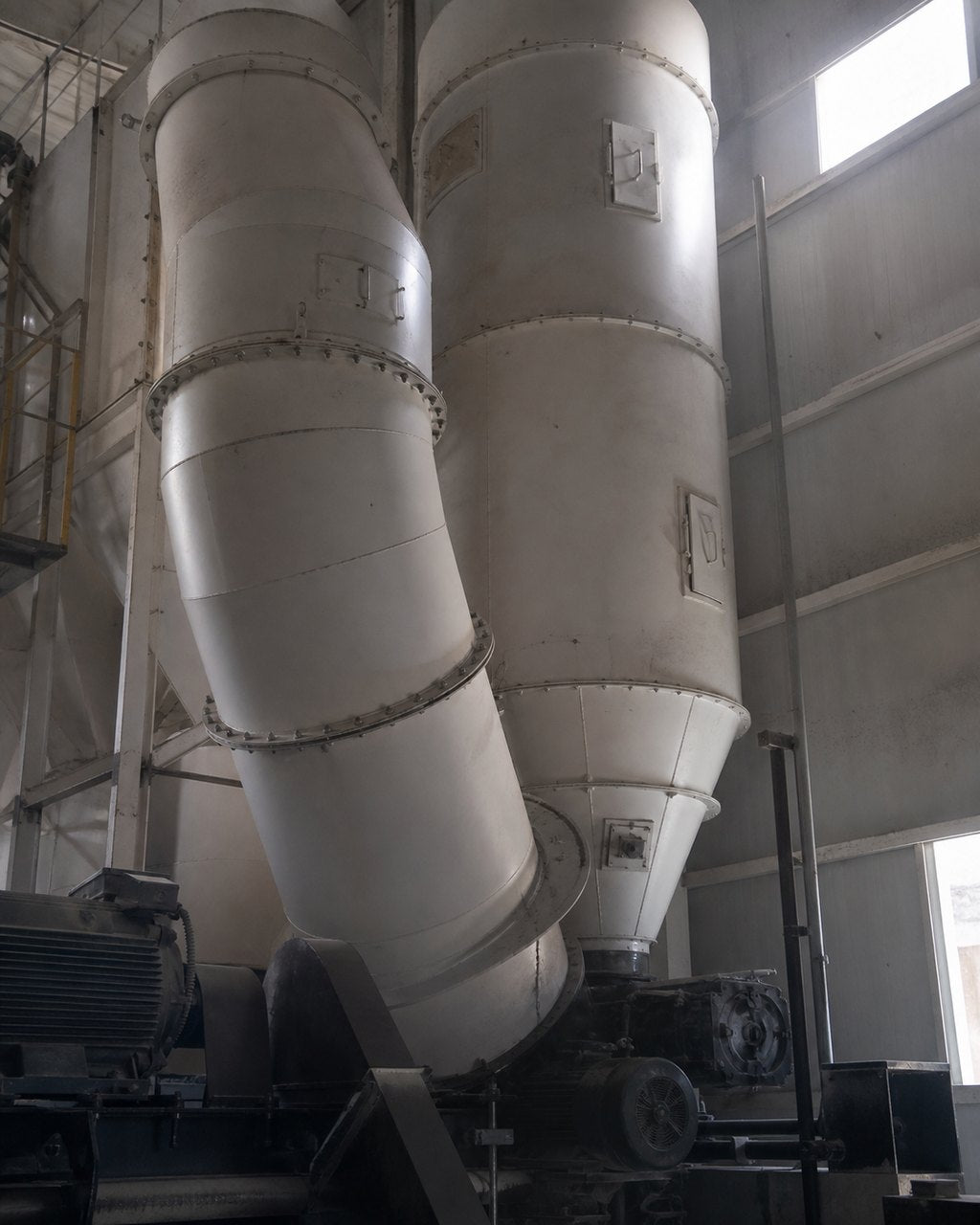
Large steel cyclones and ducting in a kernel plant, the pale conical vessels rising into the roof space of the shed.
05

Kernel Plant

Remote monitoring via MyPalm
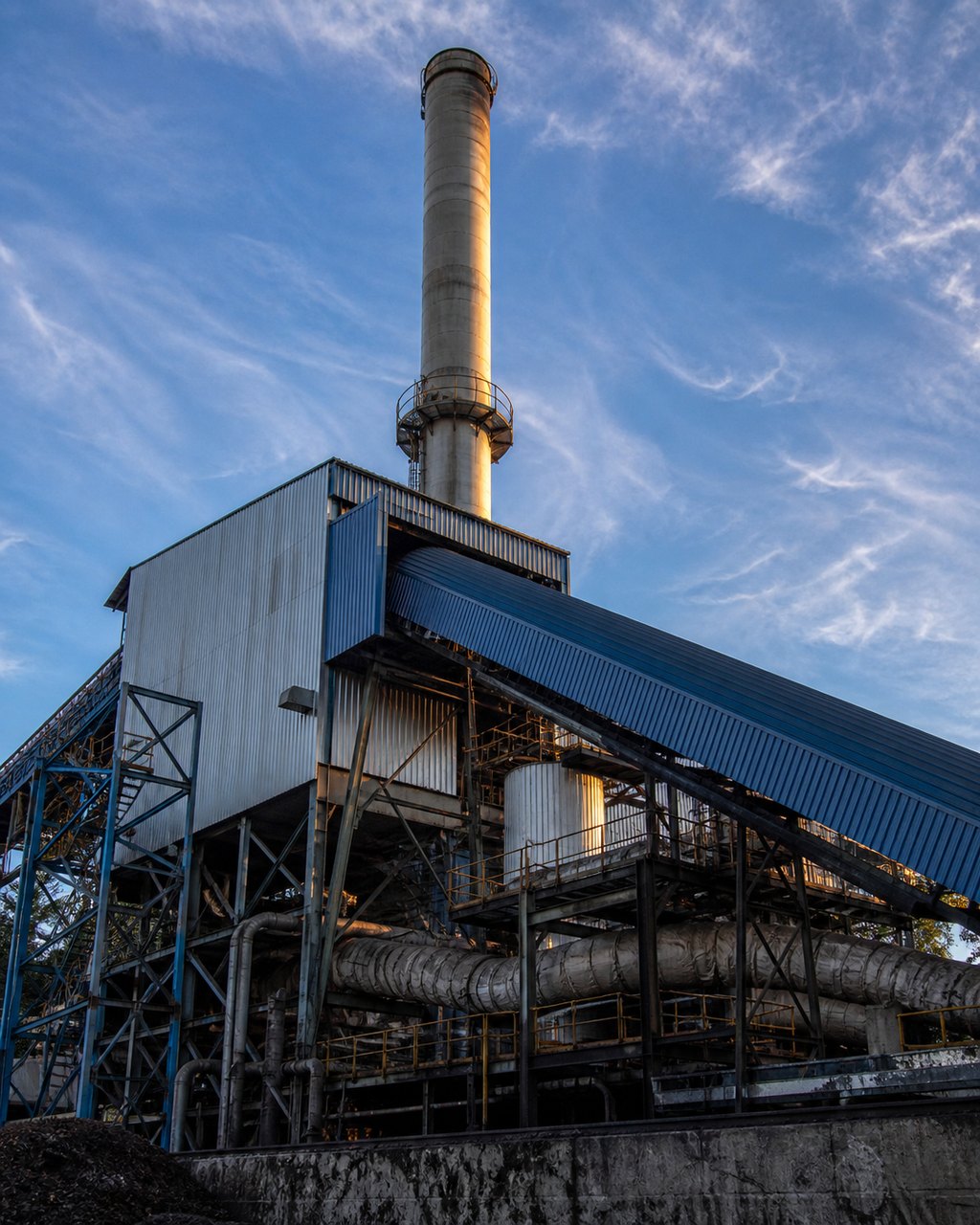
A mill boiler house with its tall stack, blue-roofed sheds and pipework below, seen from outside against a bright sky.
06

Boiler

Remote monitoring via MyPalm
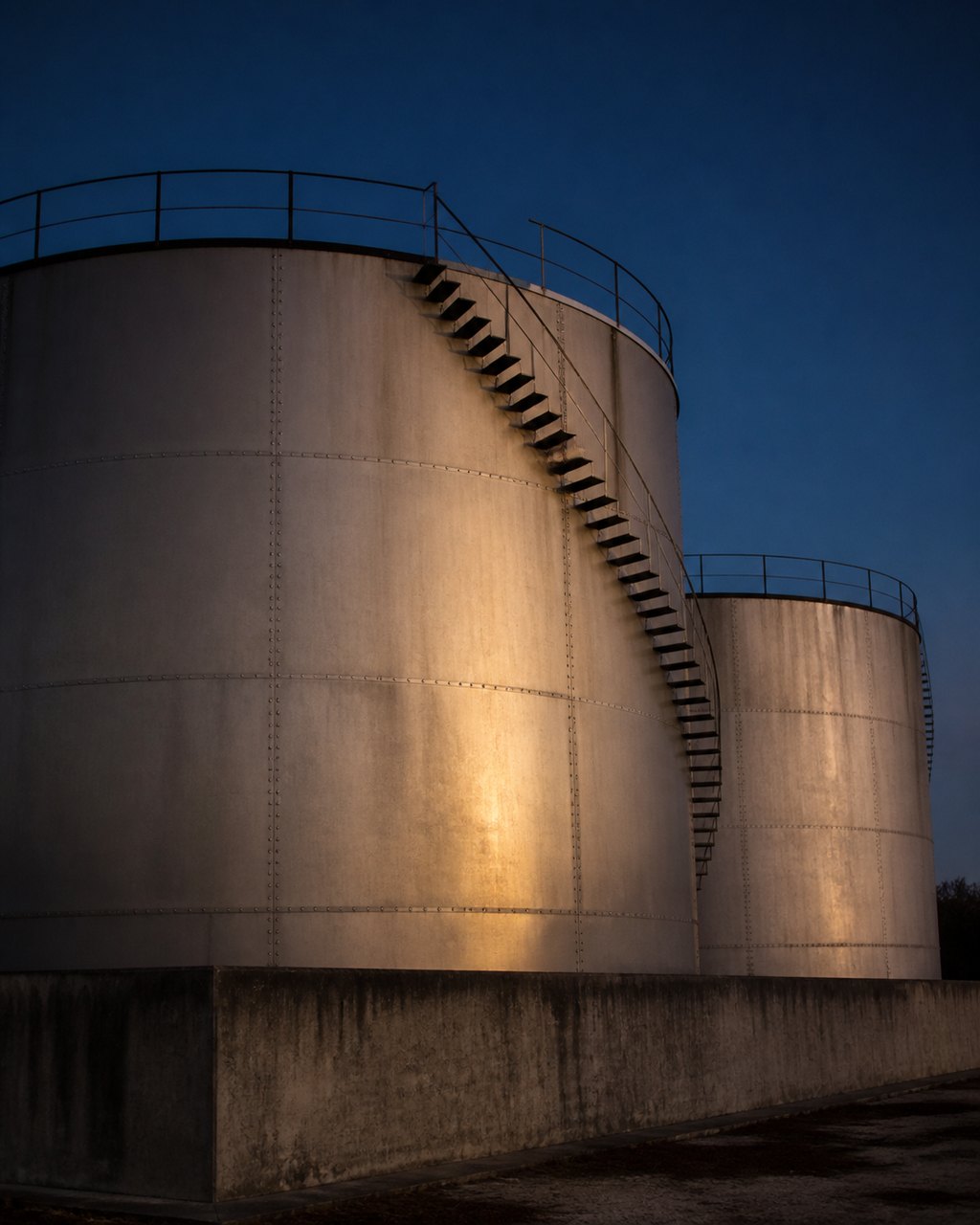
Crude palm oil storage tanks at dusk, a spiral access stair climbing the nearest shell, warm low light on the steel.
07

CPO Storage Tank

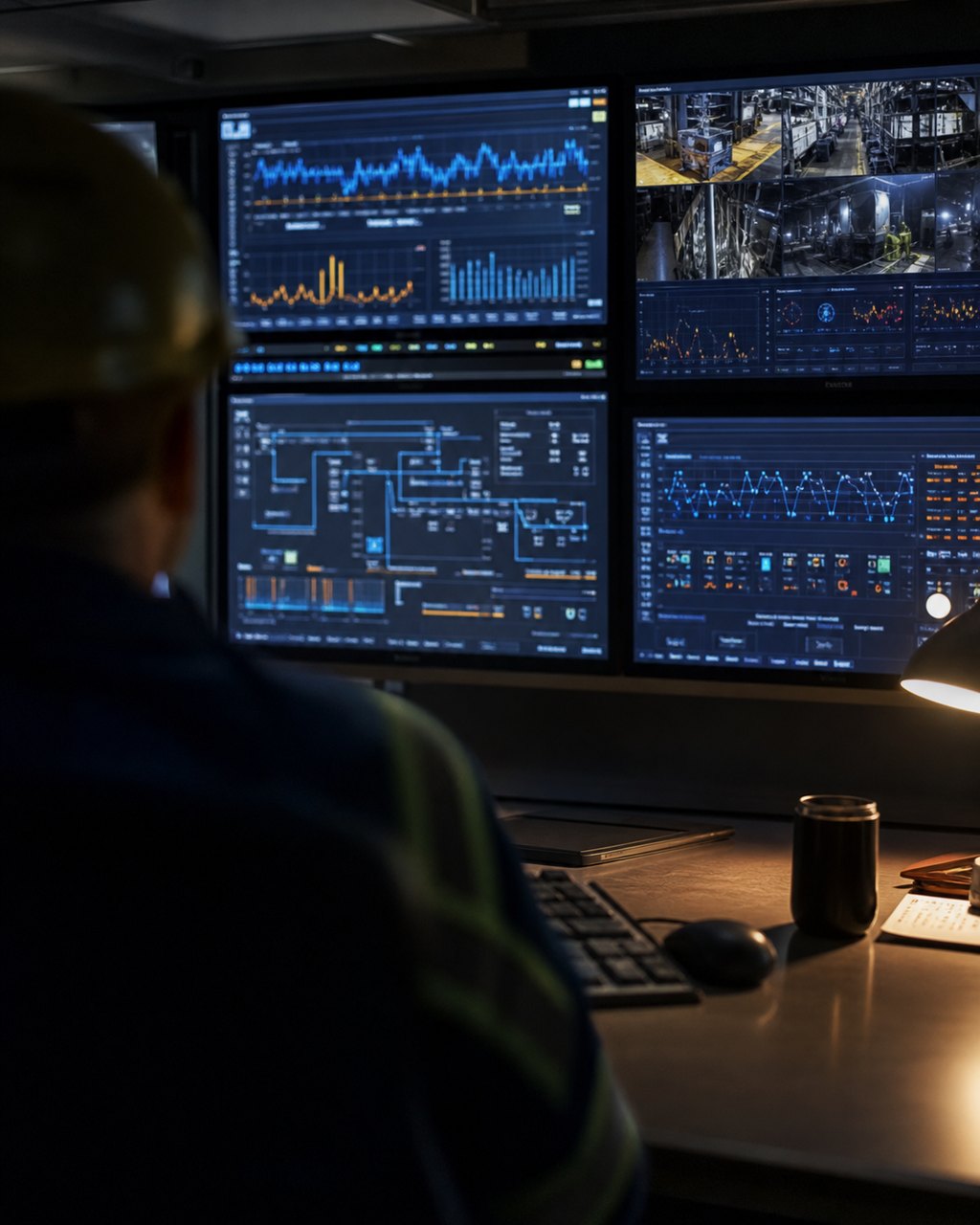
A mill operator seen from behind at a data-room console, facing a bank of screens carrying blue process graphics, charts and plant views. Their face is not visible.
08

Data Room

Listed by station, not by the order the oil flows — The Edge Malaysia lists the same eight the same way.
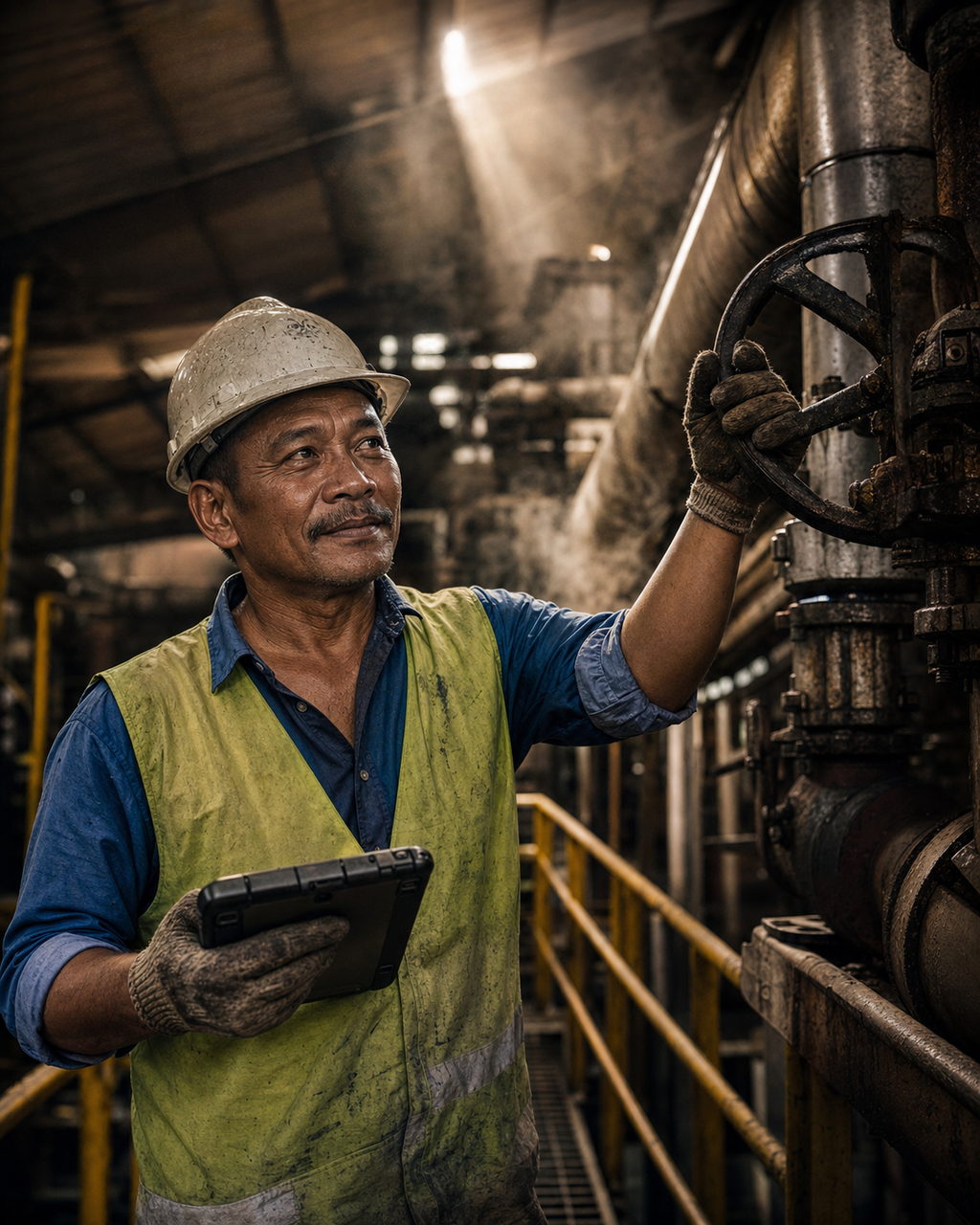
A man in a hard hat and hi-vis vest on a grated walkway inside a mill, one gloved hand on a steam valve handwheel and a rugged tablet in the other, looking up toward the pipework as light falls through the roof.

What instrumenting looks like

A station gets sensors, a tap point and a route back to the mill’s own screens. Gangway by gangway, on a plant still running.

1.0 FFB Ramp & Weighbridge

The crop, the supplier and the day’s quality all arrive here at once. The ramp door stops being somebody’s job.
  • Online FFB analysis
  • Automatic opening and closing of ramp door
  • Supply chain traceability (linked via MyPalm Plantation and MyPalm Dealer with smallholder polygon maps)
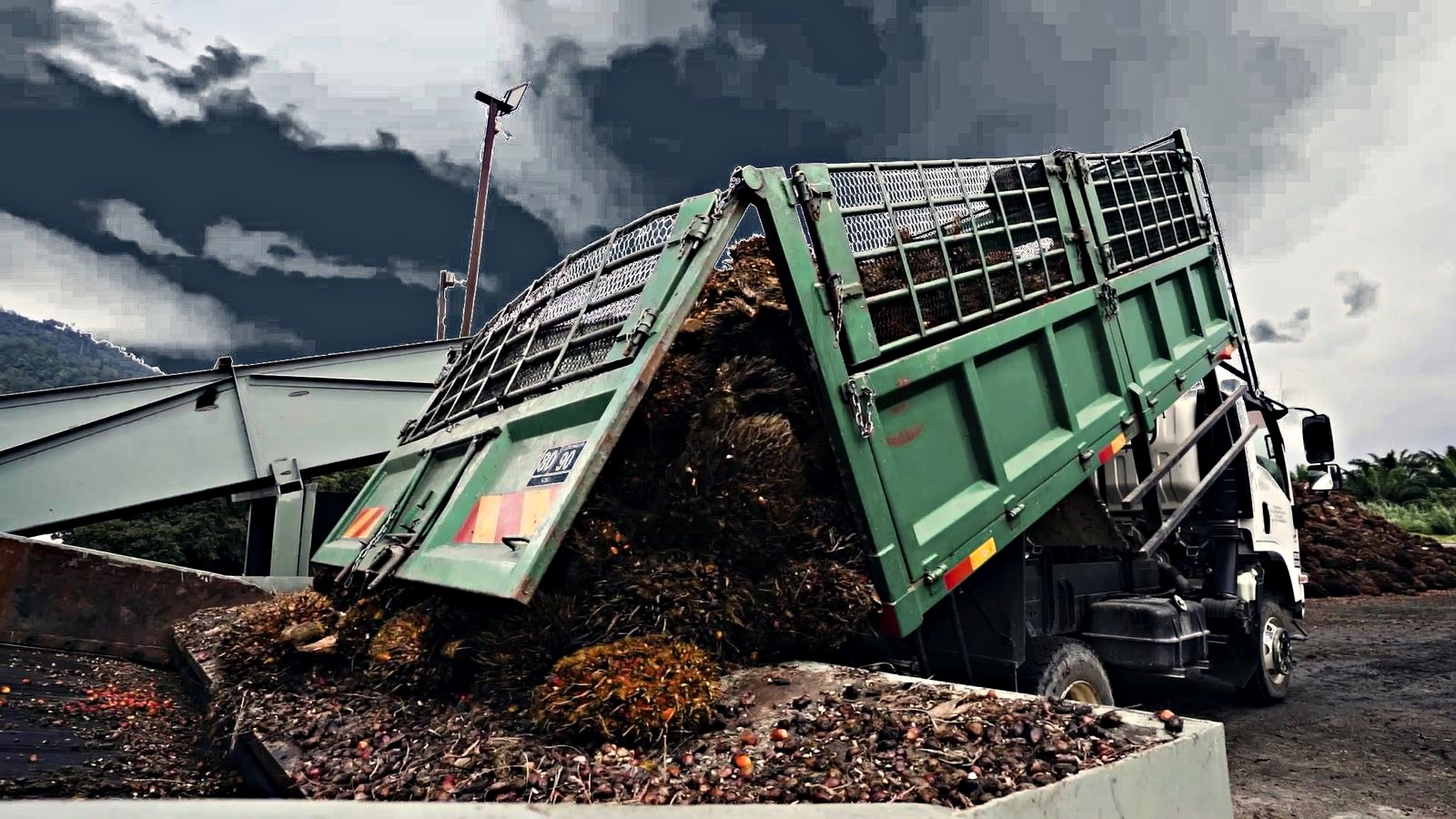
A tipper truck discharging fresh fruit bunches onto the mill's receiving floor, loose fruit spilling across the concrete apron under a dark overcast sky.
FFB delivery, reception ramp // Minsawi, existing plant

1.1 Sterilizer

The cook is chosen from the fruit, not from the roster.

  • Auto selection of cooking recipes based on FFB quality
  • Online USB analysis
  • Automated feeding control using AI based cameras
  • Remote monitoring via MyPalm

1.2 Digester & Press

This is where oil is lost. It is the station the closed loop is built around.

  • Automated level and temperature control
  • Water dilution control
  • Remote monitoring via MyPalm
  • Real-time prediction of mesocarp fibre oil loss

see what happens to that prediction →

1.3 Clarification

Oil that leaves in the underflow is oil you already paid to press.

  • Automated level and temperature control
  • Online VCT underflow oil losses monitoring
  • Automated oil skimming in VCT

1.4 Kernel Plant

The bunker and the silo report their own level and temperature.

  • Kernel bunker and kernel silo level monitoring
  • Temperature control
  • Remote monitoring via MyPalm

1.5 Boiler

The boiler and turbine report themselves, the fuel feed adjusts itself, and every asset carries a tag an engineer scans with a phone.

  • Real time boiler and turbine data monitoring
  • Auto boiler fuel control QR code based maintenance
  • Remote monitoring via MyPalm

the QR-code maintenance line is the painted asset tag on the plant, read by phone
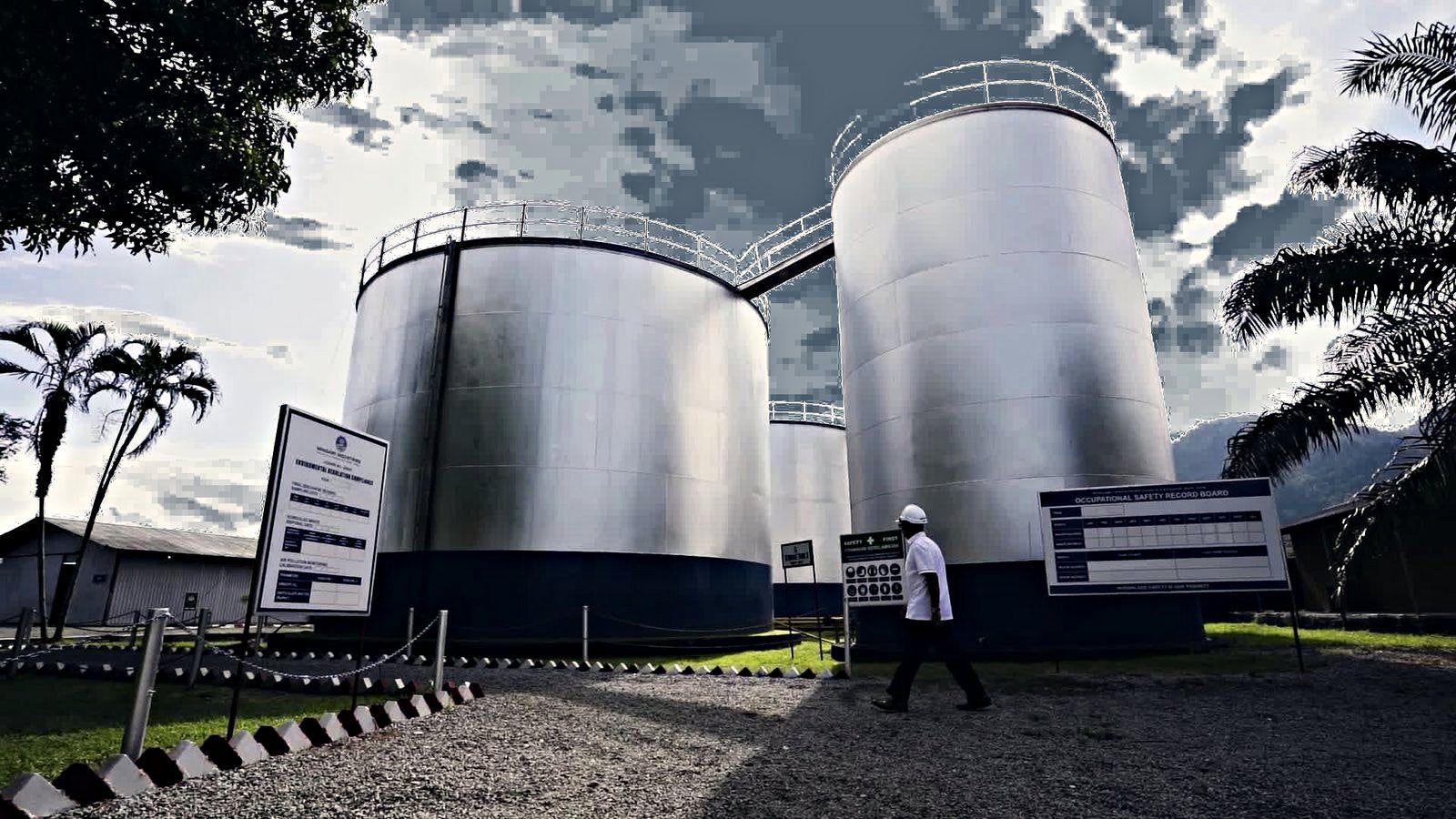
Three stainless crude-palm-oil storage tanks with dark navy skirts at the Minsawi mill — two in the foreground and a third set back between them, each with a railed walkway around its rim and a catwalk bridging them — framed by palm fronds, with a worker in a white hard hat walking past an occupational safety record board in the foreground.
CPO storage // the stock nobody watches at 3am

1.6 CPO Storage Tank

  • Automatic tankgauging system to monitor stock
  • Real-time notifications to detect unauthorized movements
  • Instant OER calculation using flowmeter

“Real-time notifications to detect unauthorized movements” is theft detection.

The tank measures its own level and alarms when oil moves that nobody authorised. You find out the same night, not at the next stock take.

“Instant OER calculation using flowmeter” is knowing today, not yesterday.

Most mills work out OER afterwards, from the lab result and the paperwork. A flowmeter at the tank gives it to you during the shift — the only version you can act on.

1.7 Data Room

  • Real-time reports
  • AI based decision making to ensure smooth process control
  • MyPalmGPT features to assist production and maintenance team
  • Integration between operation, finance, human resource and weighbridge data The Edge Malaysia, 25 May 2026 renders this wider, naming “operations, maintenance, store, procurement finance, human resource and weighbridge data”.

MyPalmGPT: an assistant your production and maintenance teams can ask in plain language.

The screen below is real: a press-breakdown query answered as a checklist an engineer can work down, on the floor, at 14:47.

Two ways to grade, and you can buy either.

MyPalm Mill records your grader’s call. The unmanned grading rig makes the call itself.
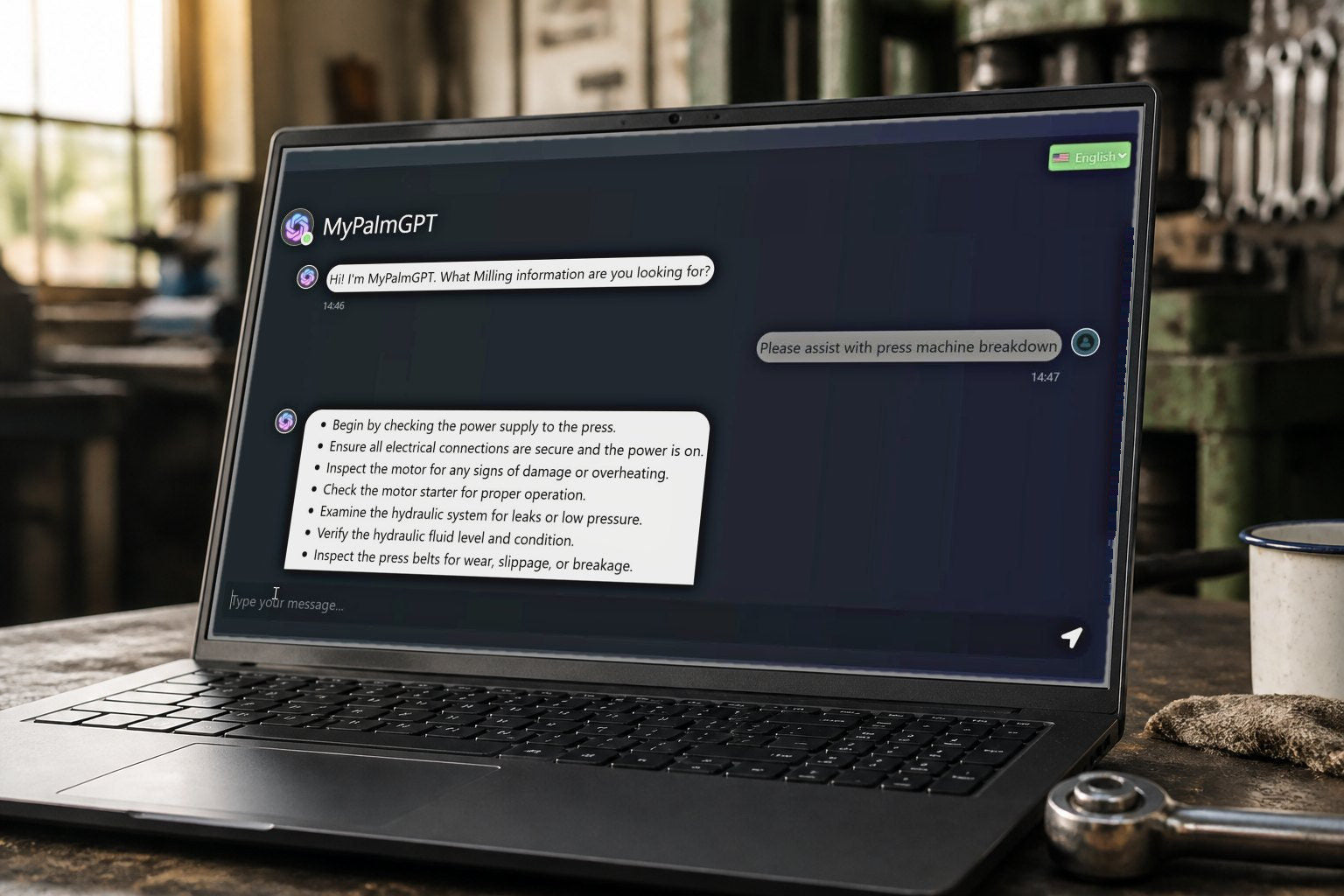
An open laptop on a scratched steel workbench in a mill maintenance shop, the green frame of press machinery and a pegboard of hanging spanners out of focus behind it, an enamel mug and a torque wrench on the bench. On the screen, the MyPalmGPT chat: the assistant opens at 14:46 with “Hi! I’m MyPalmGPT. What Milling information are you looking for?”, an operator answers at 14:47 with “Please assist with press machine breakdown”, and the reply comes back as a seven-point checklist — begin by checking the power supply to the press; ensure all electrical connections are secure and the power is on; inspect the motor for signs of damage or overheating; check the motor starter for proper operation; examine the hydraulic system for leaks or low pressure; verify the hydraulic fluid level and condition; and inspect the press belts for wear, slippage or breakage. A message box at the foot of the screen reads Type your message.
MyPalmGPT // real screen, press-breakdown query, 14:47 — a machine fault answered as a checklist an engineer can follow, on the mill floor.

What the instrumentation actually does
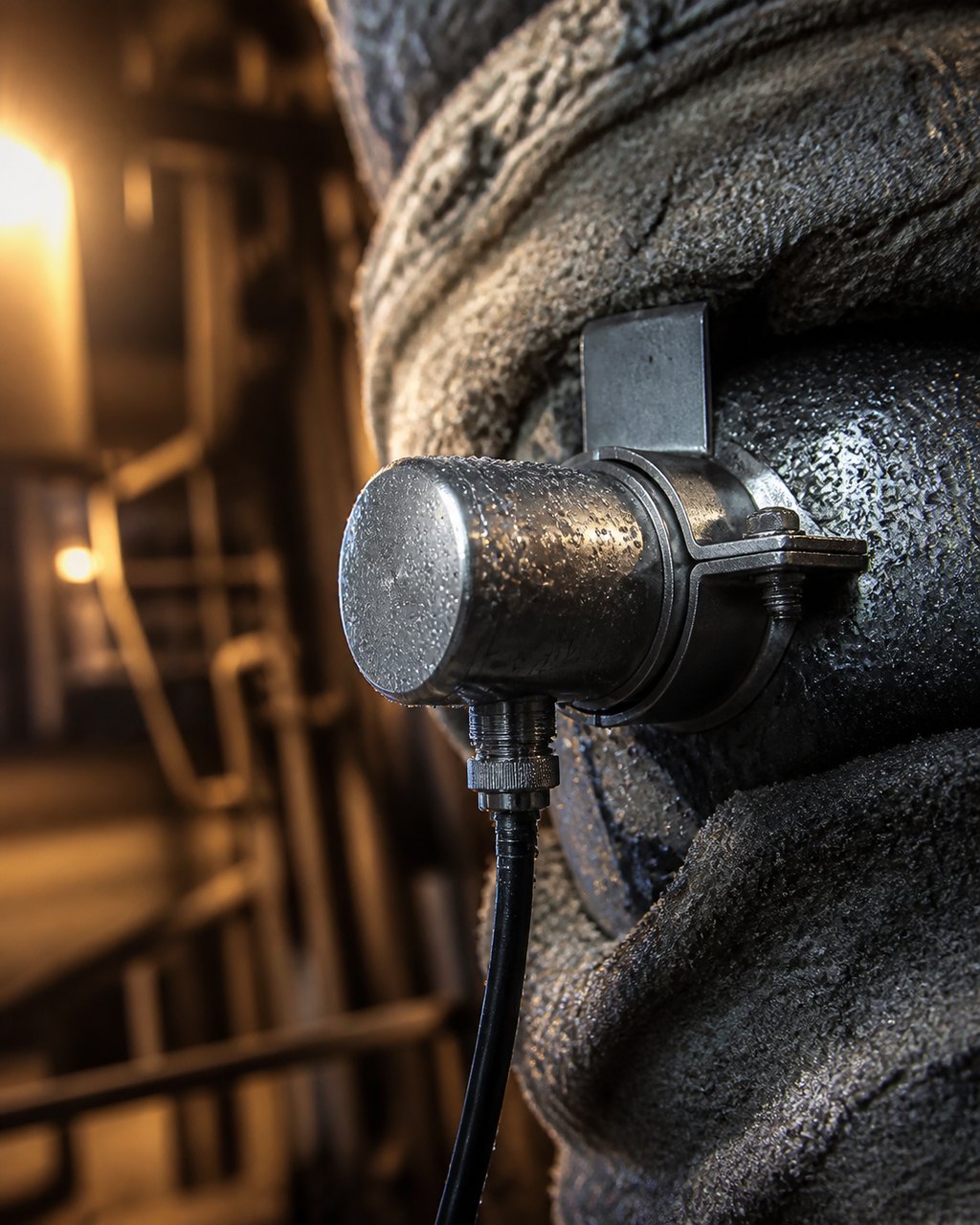
A compact process sensor clamped to a lagged pipe inside a mill, a short cable dropping away, condensation beading on the steel.

What comes out the far end

Crude palm oil, graded by colour and free fatty acid. Every control decision upstream is eventually an argument about this glass.

It does not stop at the dashboard.

Four steps. Step 4 lands on the plant, not on a screen.

The control cycle  //  step 4 is amber because it lands on the plant, not on a screen. The amber leg leaving it carries the correction back into step 1.
“Temperature (°C) is low. Please activate the steam actuator valve in auto mode.”
Press Station Abnormal ReportThe Remarks cell on a live MyPalm screen

// A dashboard tells you what happened. This names the deviation, the valve and the mode. Ask us for the report in full.

  1. 1

    It measures

    Sensors on the sterilizer and the press read the fruit going in, with its grade coming straight off the weighbridge.

  2. 2

    It predicts

    It works out how much oil the press is losing — before the laboratory result comes back.

  3. 3

    It says why

    It names the reason and gives the correction that answers it.

  4. 4

    It acts

    It moves the steam flow and the oil drainage itself. Nobody has to be told first.

↩  and the next reading starts the loop again
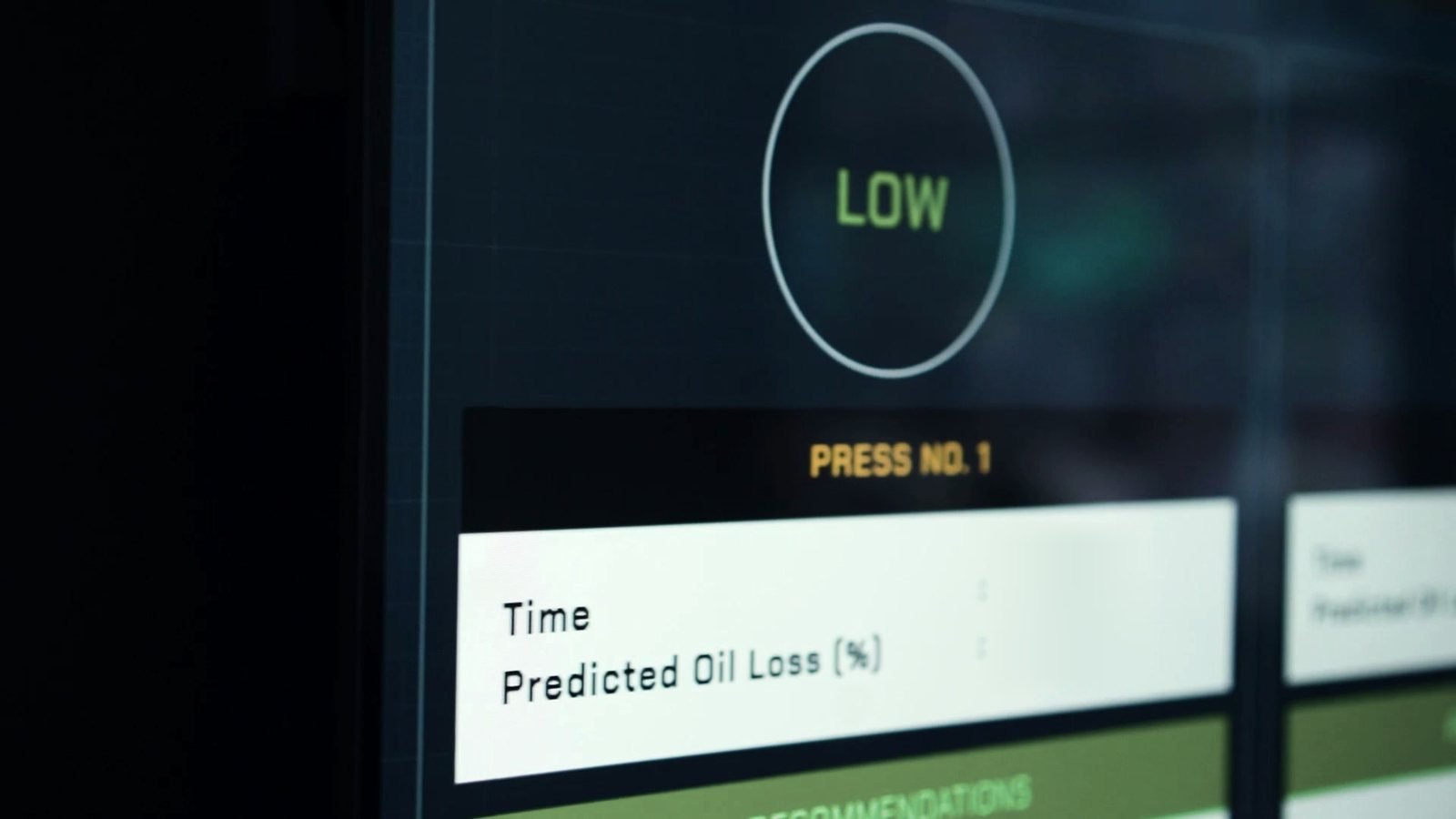
An angled photograph of a control-room screen in the mill. A panel headed PRESS NO. 1 shows a status ring reading LOW, with rows labelled Time and Predicted Oil Loss in per cent, and a RECOMMENDATIONS band beneath them. The two live values beside those labels are blurred out. A second identical panel for the next press is visible alongside.
The prediction, on the plant  //  the screen names the press, a predicted oil loss and a severity — step 2 of the loop above, photographed. The two live readings are blurred.

This is closed-loop control, not analytics. Every competitor in the category sells a dashboard that tells a human what happened. This one moves the valve.

Your board will ask why this is a plant investment and not a software licence. Because the last step moves a valve.

Who walked it

Two delegates, on the day,
in front of the mill’s own sign.

The International Palm Oil Millers Conference visited this plant on 25 April 2026. These two spoke to a phone camera afterwards, in front of the Minsawi board.

Who Lai Chung Seng Runtime 0:30 Cut from 1:43, at 0:44 Name from his IPOMC26 badge

Who Ramesh Devaraju Runtime 0:27 Cut from 1:14, at 0:10 Name from his IPOMC26 badge

How we work

Instrumentation before intelligence.

A prediction is only as good as the steel and the instruments under it. So an engineer walks the plant first, and the eight stations are chosen there.

So nothing is quoted before a site assessment.

The eight stations are a menu, not a package. What a retrofit is worth depends on your fruit and your plant. We quote nothing until an engineer has walked it.

Minsawi could not be switched off. The work went in around a running plant, on a seven-hour Sunday window — The Edge Malaysia, 30 Dec 2024. Scheduling before technology.
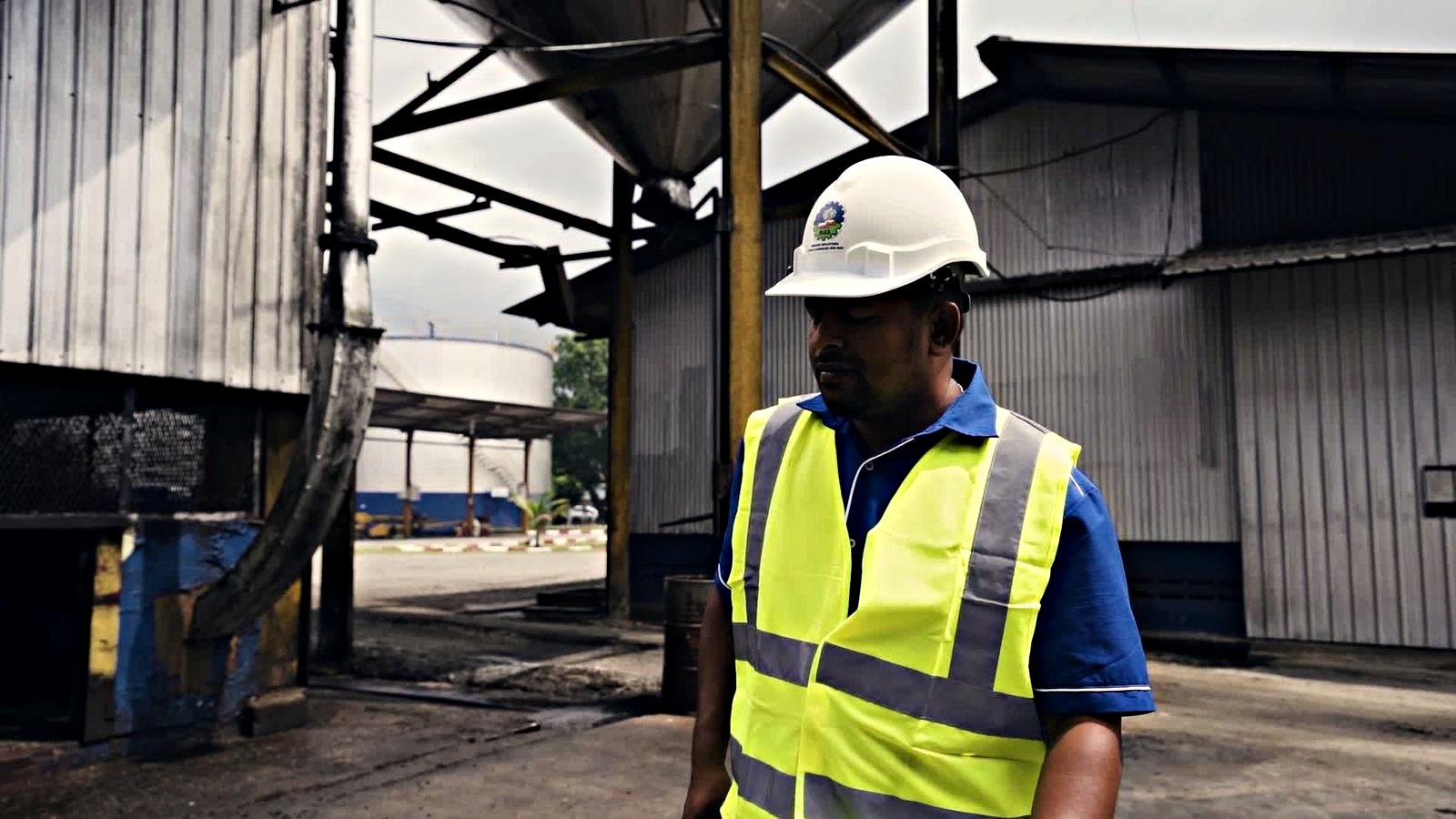
An engineer in a hard hat and hi-vis vest walking the mill yard between the process house and the storage tanks.
On site, existing plant, mill running

Pull quote: The Edge Malaysia, 25 May 2026. The Sunday-window account is Surendran’s own, given to the same paper.

Next step

Book a site assessment.

An engineer walks your mill and tells you which of the eight stations are worth instrumenting on your plant.

Book a site assessment See the grading rig

Or reach us directly

+603-8685 0888 info@airei.com.my Cyberjaya, Selangor