
Unmanned AI FFB Grading
From bunch inspection
to a connected grading record.
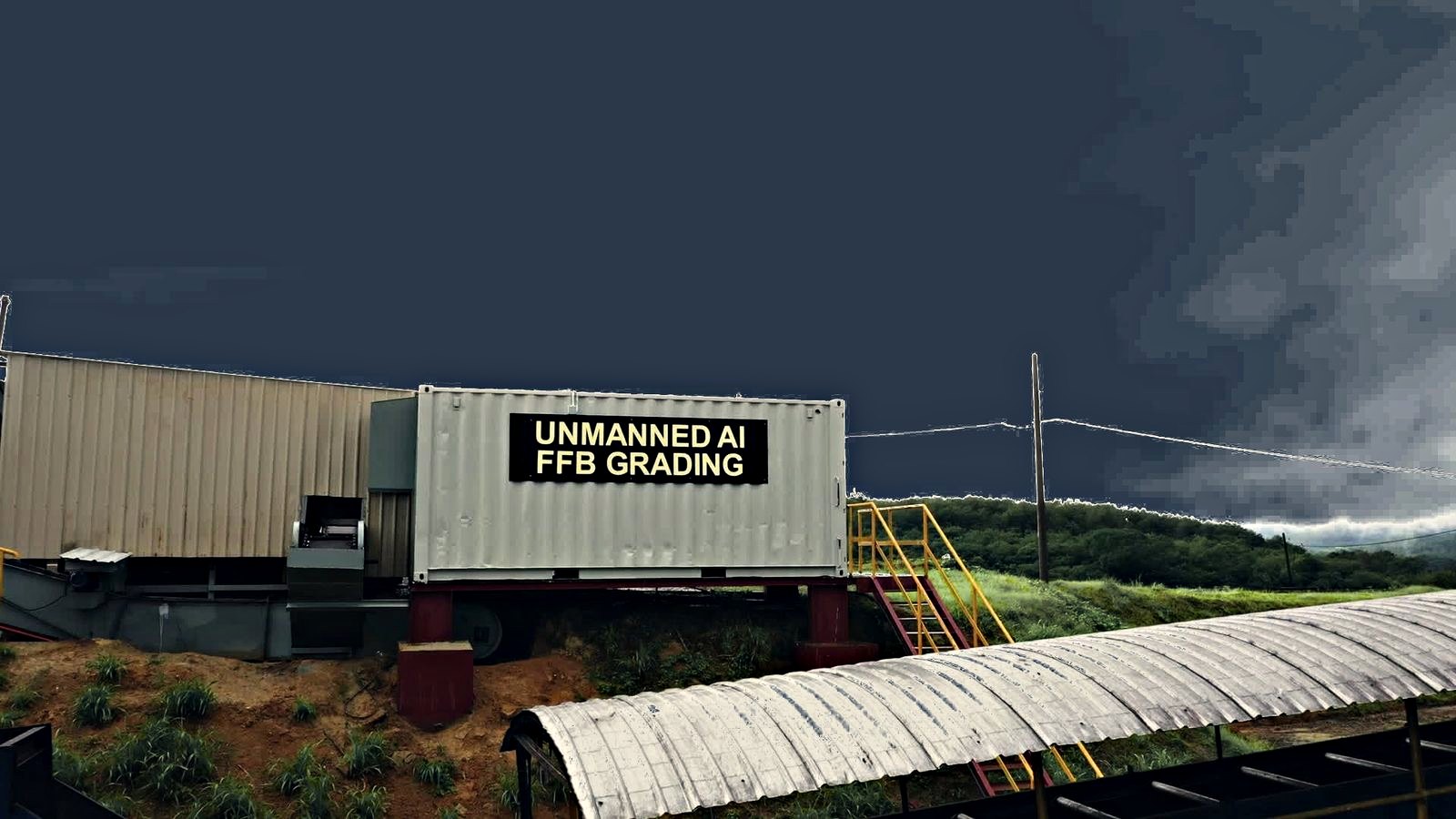
Unmanned AI FFB Grading brings the intake workflow together. Bunches are individualised and rotated for RGB, socket, spikelet and thermal inspection. The system supports grader acknowledgement, quality-based sorting, loose-fruit segregation, electronic grading chits, supplier records and weighbridge integration.
“World’s first palm oil mill to adopt AI” — The Star, 19 Nov 2024 · See the rig on real fruit
The rig’s own output
This is the rig looking
at real fruit.
Not a diagram. One frame off a live belt, with the machine’s own masks burnt in. Everything coloured was drawn by the rig.
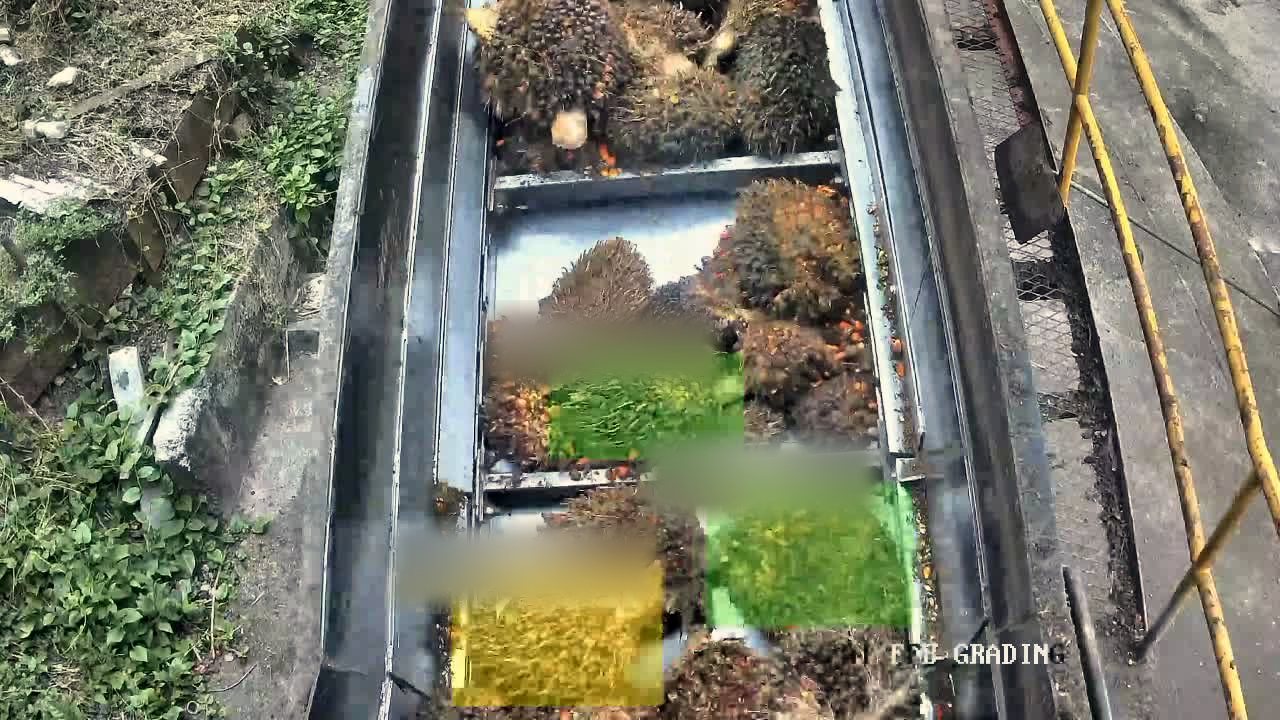
- 01–03 The three regions the grading system localised in this frame. Each bracket sits on the position listed below.
- FILL Inside a bracket the rig’s own segmentation fill runs bright; outside it is dimmed.On paper the frame prints undimmed; the brackets, labels and coordinates carry over.
- RGB The colour channel is one of four. Socket, spikelet and thermal read the same bunch on the tiers that follow.
- Source file
- assets/img/vision-overlay-redacted.jpg
- Frame
- 1280 × 720 · grading rig, FFB conveyor
- Zone 01
- x549 y352 → x744 y460
- Zone 02
- x704 y480 → x921 y629
- Zone 03
- x450 y563 → x663 y706
- Overlay drawn by
- the grading rig, at grading time
The machine drew these masks at grading time.
The coordinates are good to about ±10 pixels and record where the machine drew.
Where the load comes from
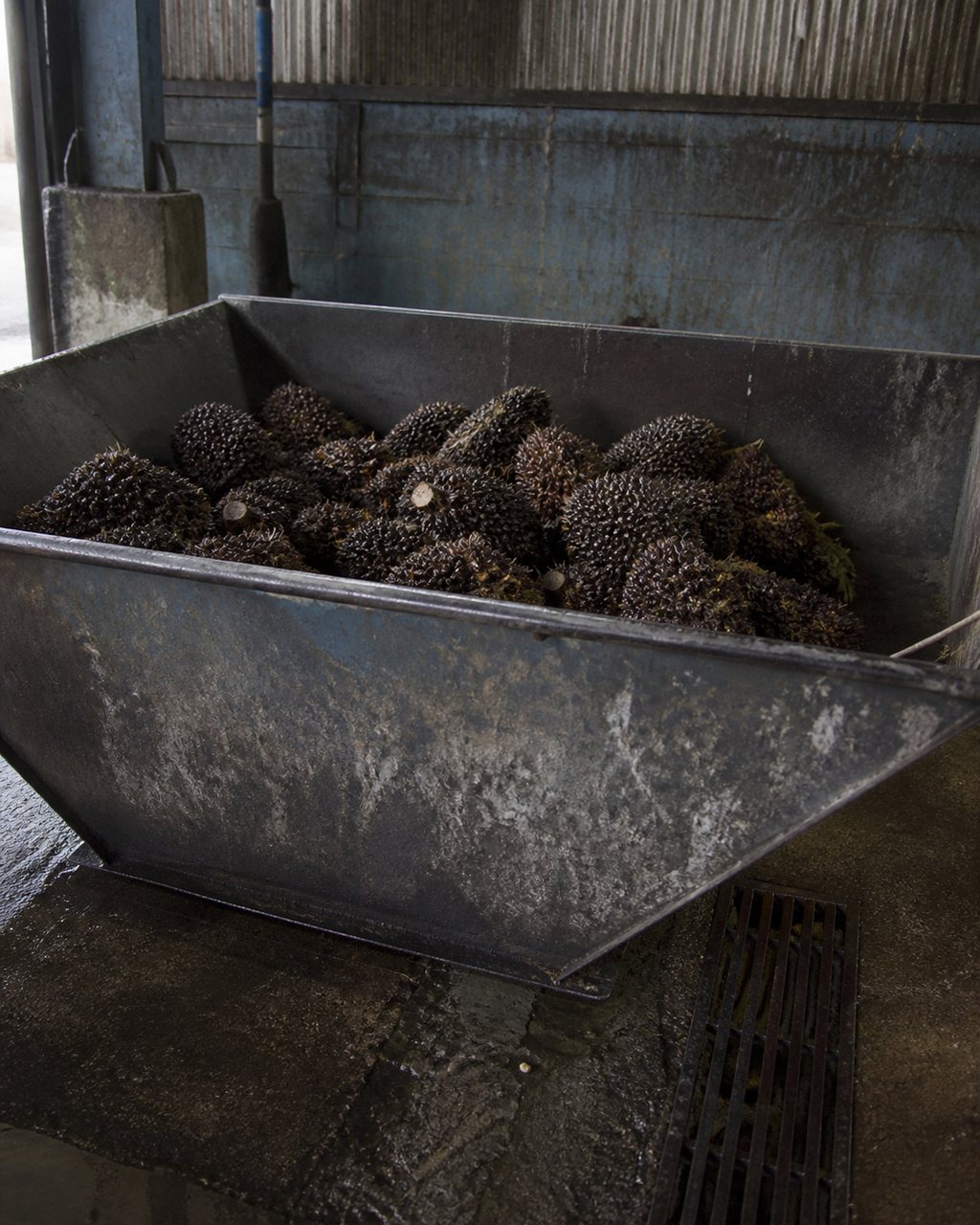
A mill’s intake is other people’s fruit. Every load is a supplier who will ask how the grade was reached.

Where it sits
Beside the ramp, on its own plinth, wired into the weighbridge.
How it works
What is being read
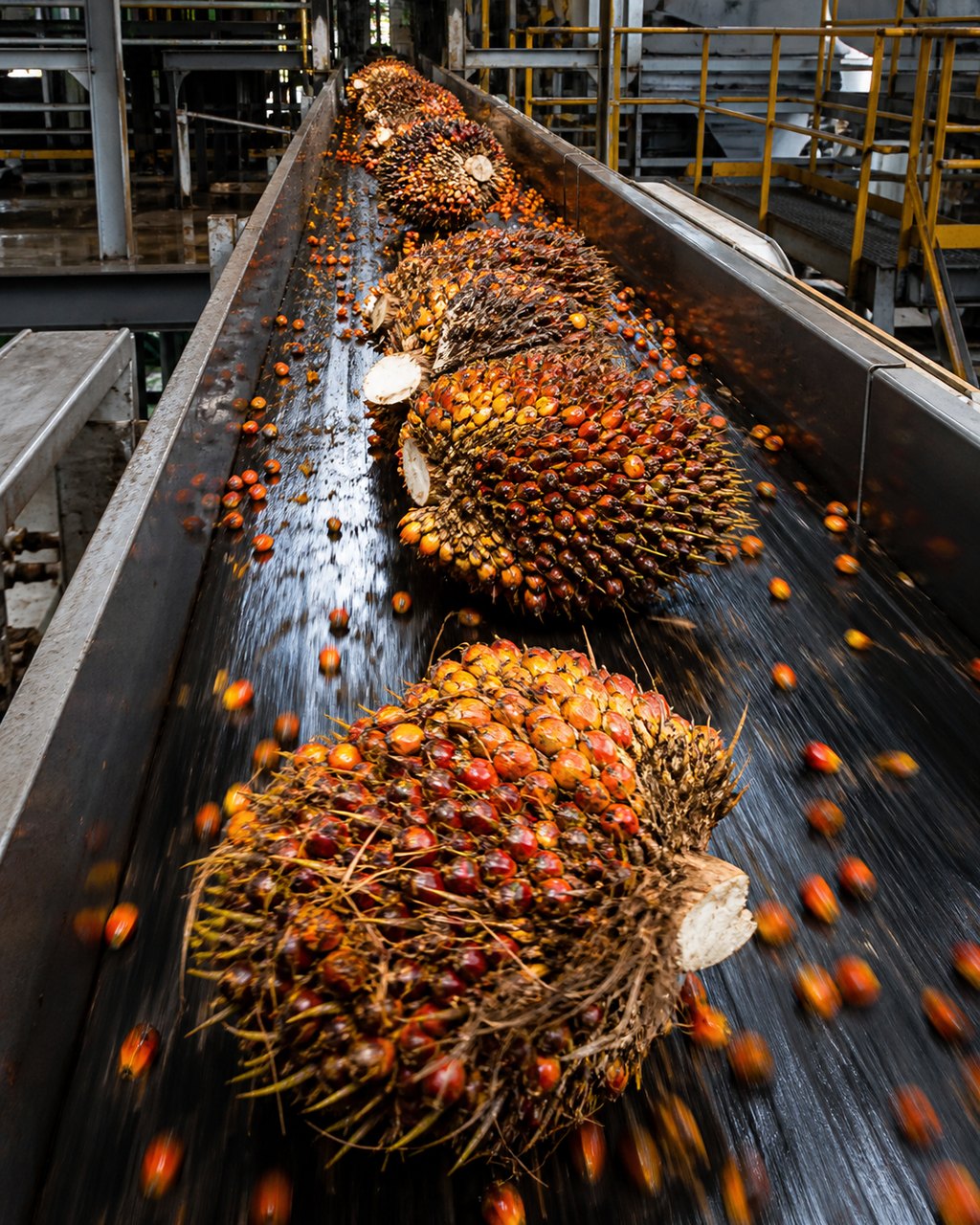
Ripeness is not one signal: fruitlet colour, how many detached, the sockets they left, the fibre between.
Four channels read the
same bunch.
One bunch at a time, turned so every side is seen. Four tiers read it, each asking a different question.
TIER 0
Individualizer & rotator
Separates the bunch and turns it through 360°, so the cameras see every face, not whichever landed upward.
TIER 1
RGB colour
Colour for ripeness — the signal a grader uses, but at a fixed distance under a fixed light, on every bunch instead of a sample.
TIER 2
Socket analysis
The sockets left by fruit that has already dropped. Colour can be argued with. Sockets cannot.
TIER 3
Spikelet detection
Spikelet detail shows freshness — how long ago it was cut. A different question from how ripe it is.
TIER 4
Thermal imaging
Heat, not surface. A bunch cannot be dressed up to fool a thermal camera.
Lorry to ramp
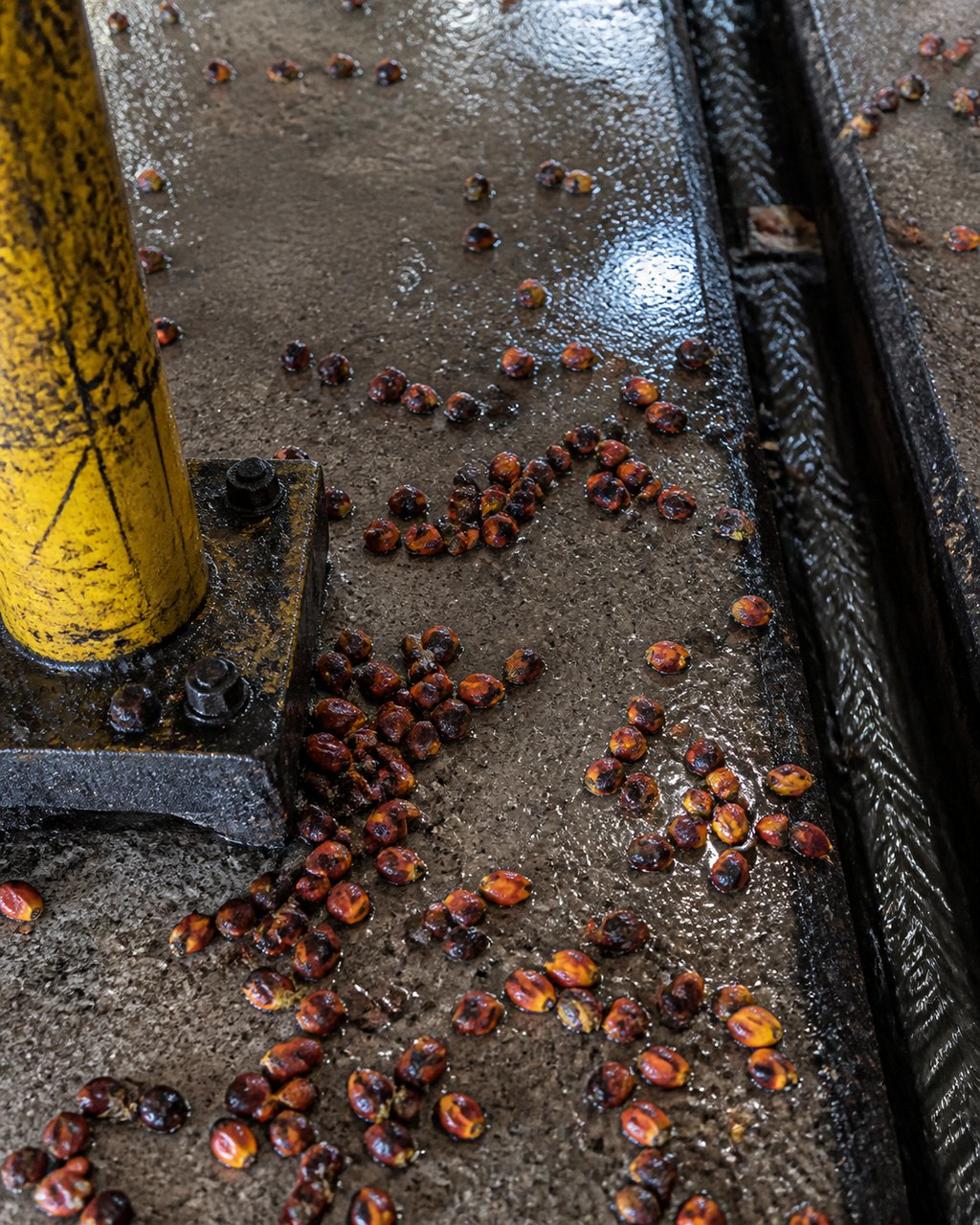
On the belt
The rig does not stop the line. Bunches arrive at the ramp’s own rate, and grading keeps up or it is a laboratory, not a mill.
What happens to a load.
- FFB is unloaded by the supplier.
- The auto feeder brings the fruit into the grading box.
- Inside the grading box, each bunch is individualised and rotated.
- Four-tier inspection: RGB colour, socket, spikelet, thermal.
- Automatic sorting on the AI result.
- Loose fruit is extracted separately.
- Ripe fruit goes to the loading ramp.
- Rejected fruit is returned to the supplier.
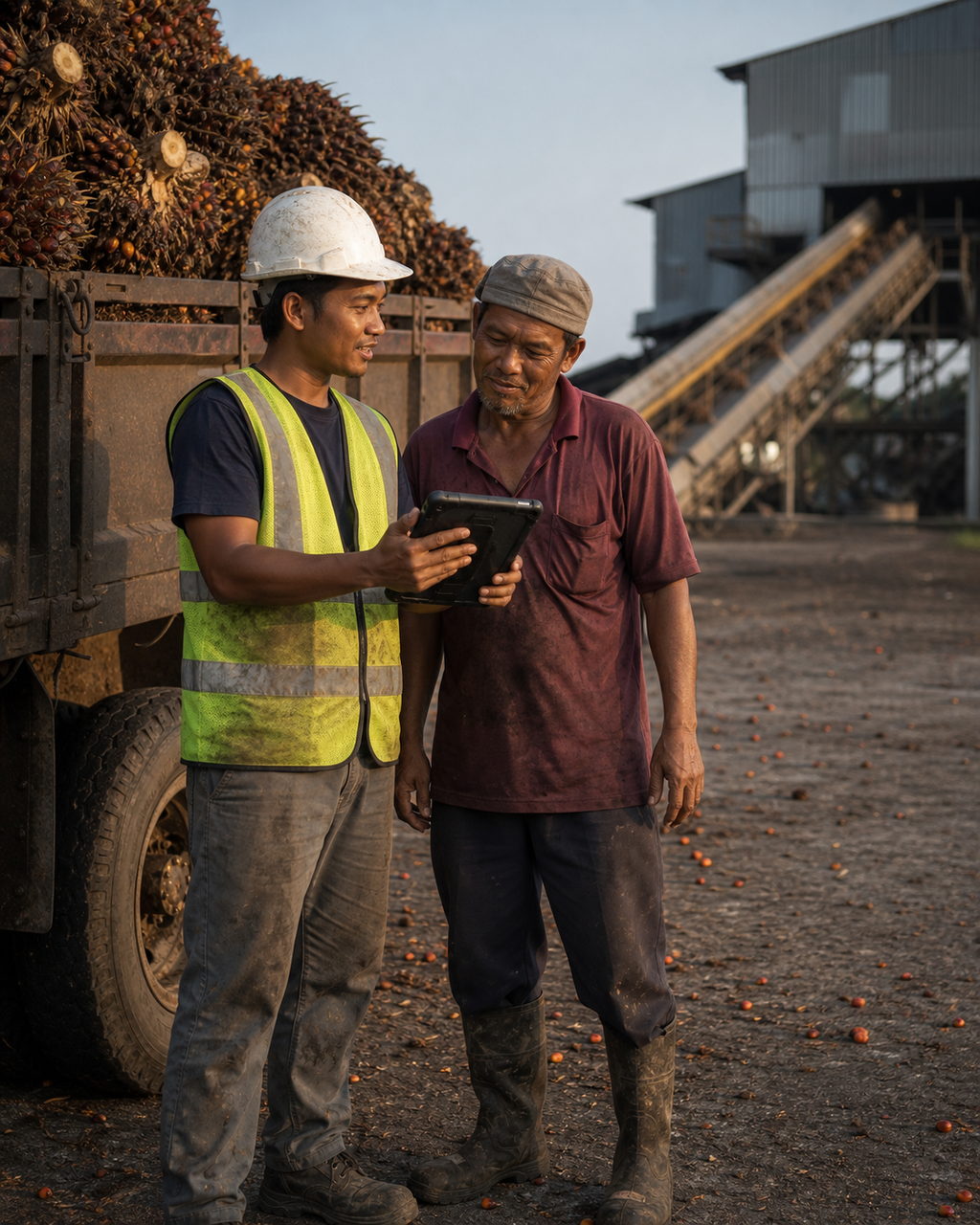
At the tailgate
The result is read where the load is standing. What used to be settled at the office days later is settled at the ramp.
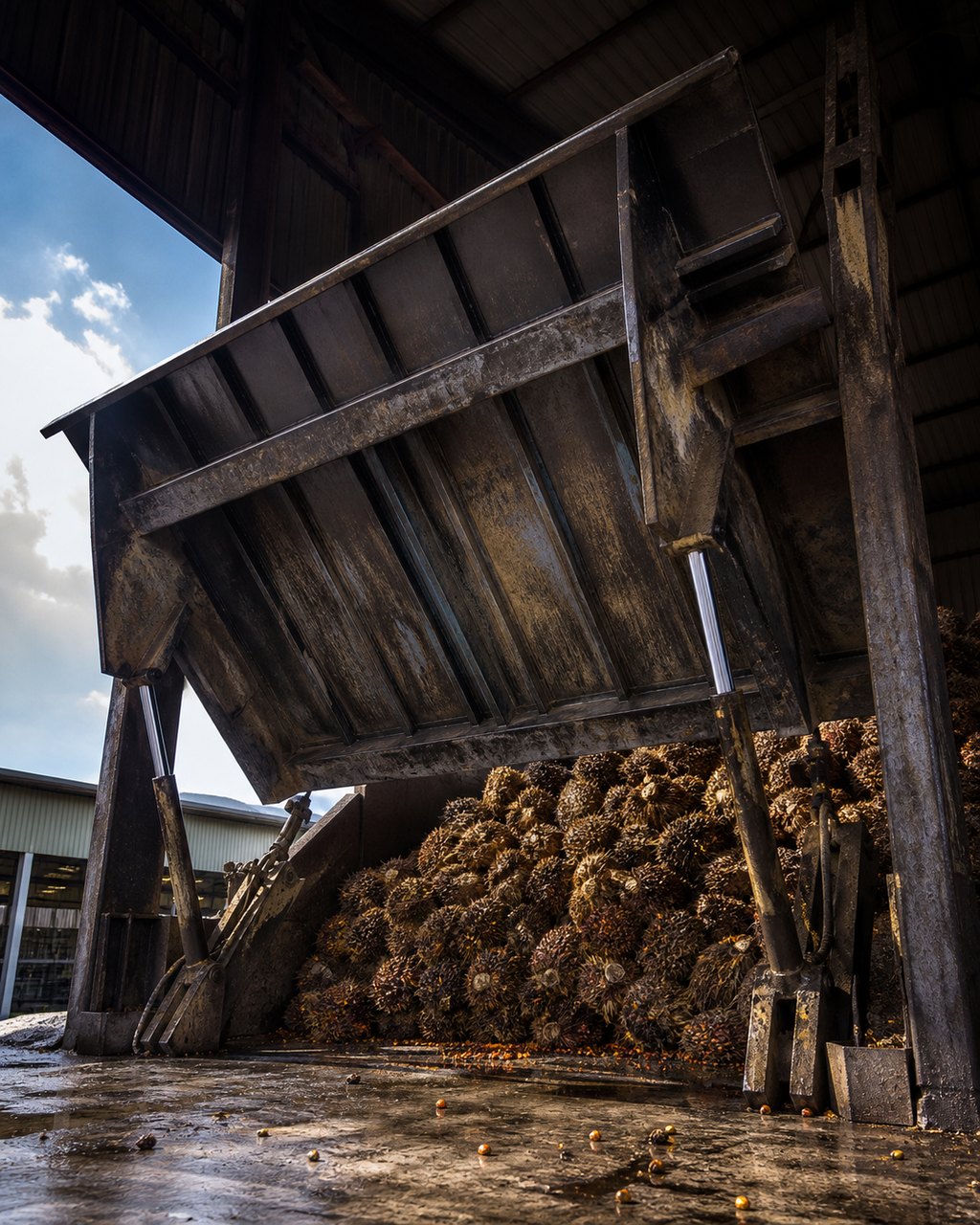
At the gate
Rejects go back on the lorry they came in on, and the chit is issued at the ramp. A supplier leaves with the result, not a promise of one.
What the mill sees
The grade stops being
an argument.
One record, made at the moment of weighing, is harder to argue with than a judgement made in the heat.
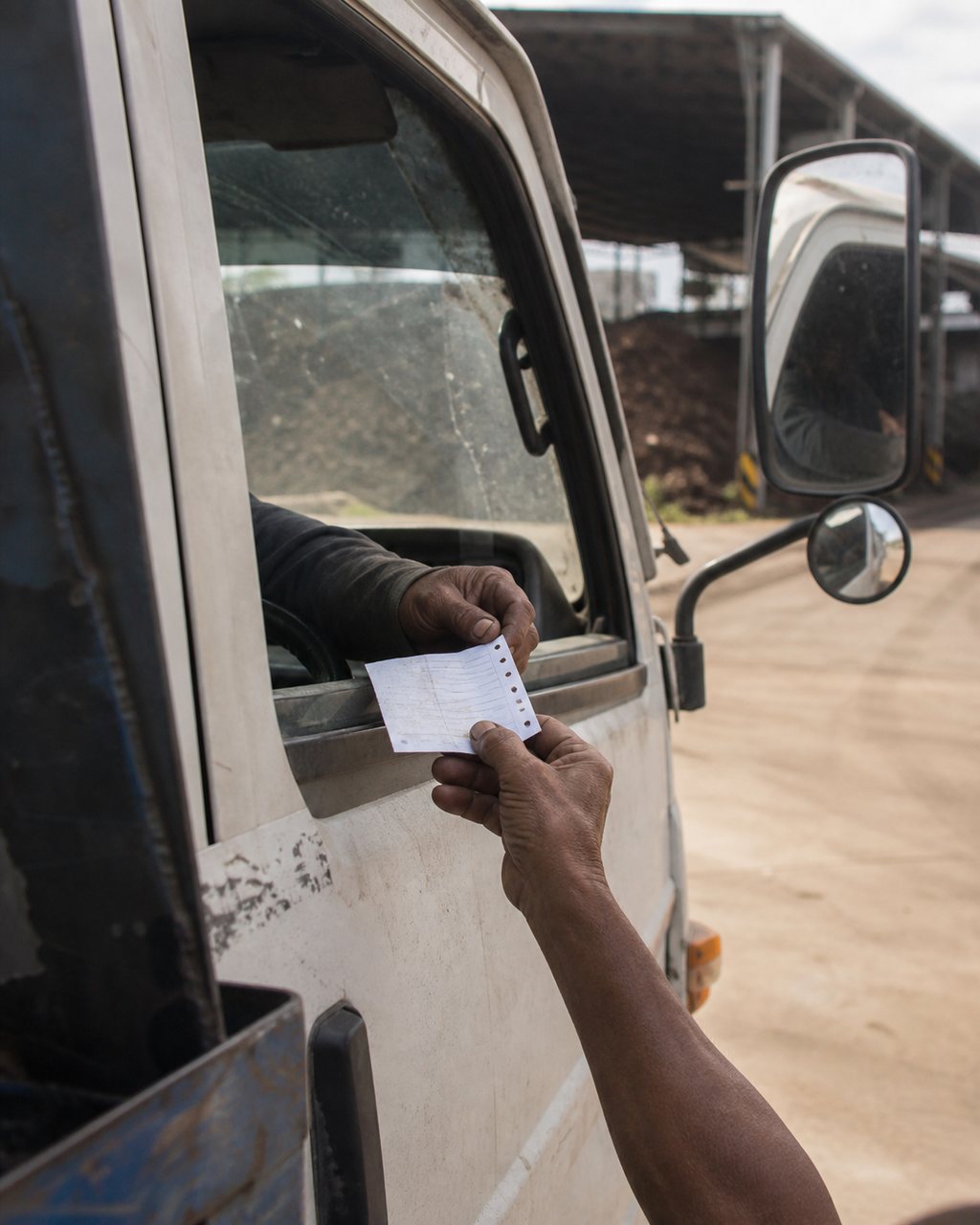
The console
Grading moves off the ramp, out of the heat and dust, onto a screen with a record behind it.
01
Control room
The line is watched from a room, not the ramp. The cabin acknowledges; it does not assign the grade.
02
Long-stalk detection
Long stalk gets its own percentage, alongside freshness. The deduction suppliers dispute most becomes a measurement, not a judgement.
03
Supplier statistics and historical pattern
Quality accumulates per supplier — a trend you can show them, and a basis for pricing that survives a conversation.
04
Weighbridge integration
Grade and weight are captured against the same vehicle in one transaction, so they cannot drift apart.
05
Instant digital grading chit
The e-grading chit is issued at the point of grading. Nobody types it in afterwards.
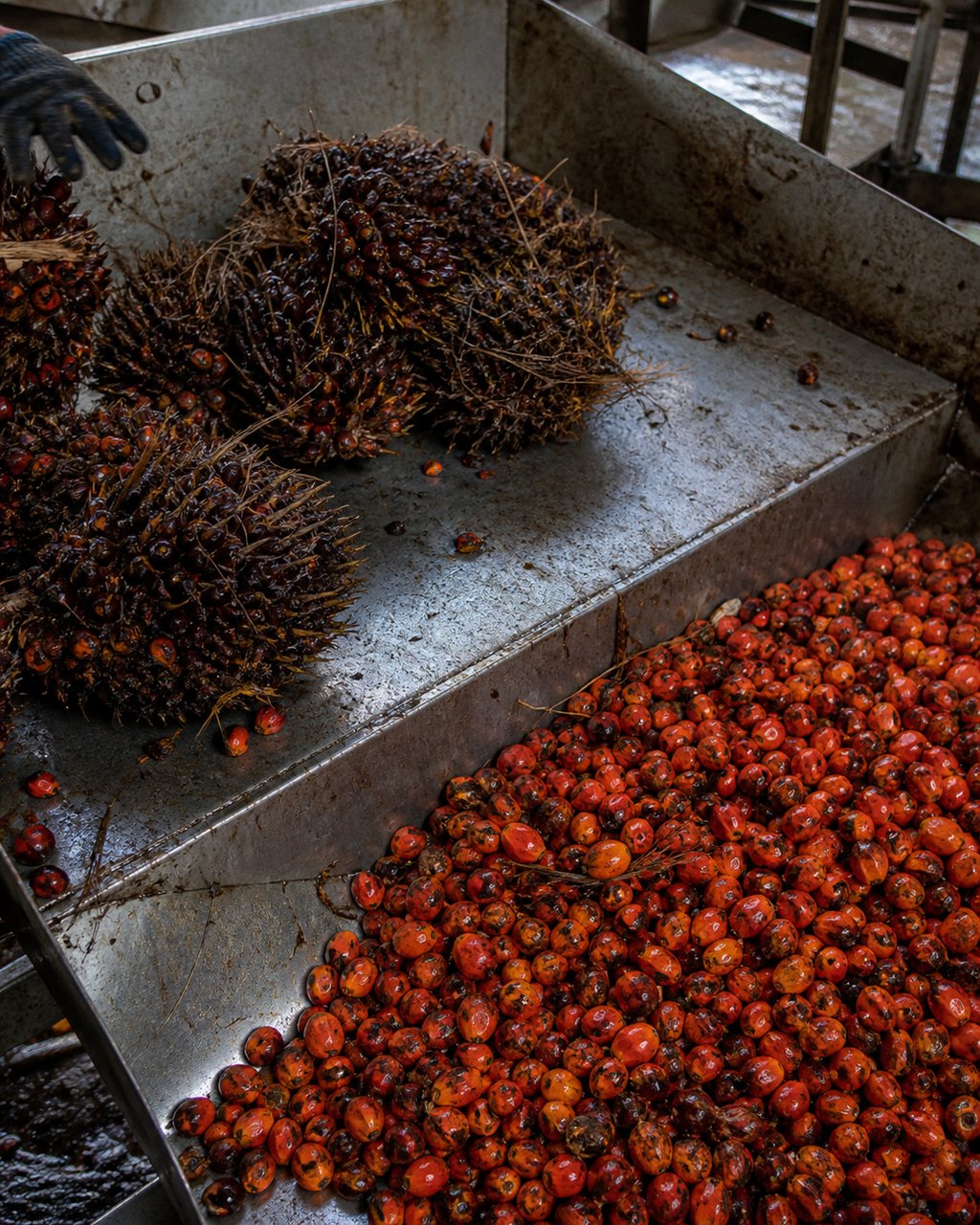
Where the two numbers meet
Suppliers argue about the deduction, not the weight. One ticket carries both, so there is one document to talk about.
What the rig grades
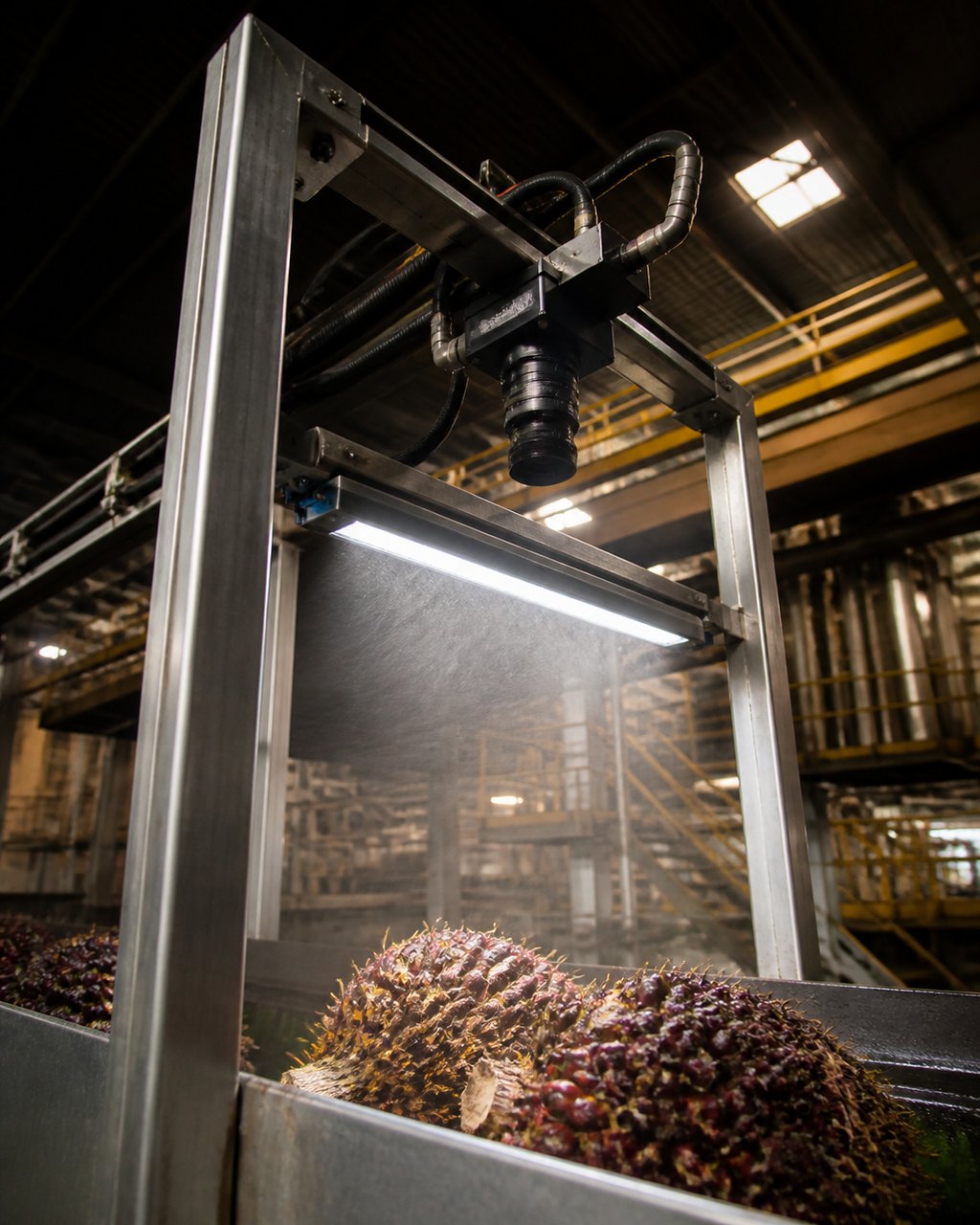
The instrument
A camera, a light bar, a frame, and a mill's own dust and vibration. Accuracy belongs to that whole assembly, not the model inside it.
Every bunch read on four channels.
Nobody types the grade in.
Every bunch is read on four channels — RGB colour, socket, spikelet, thermal. The machine issues the grade; nobody types it in.
The system grades “with an accuracy of 98%” — as published on airei.com.my/ai-ffbgrading.
Ask us for the basis and we send it in writing, in a day.
On request
The accuracy figure
- Ask, and we send it
- In writing, in a day, with its basis attached.
- What comes with it
- The grading method it was measured against, how many bunches, over what period, who ran the comparison, and which model build produced it.
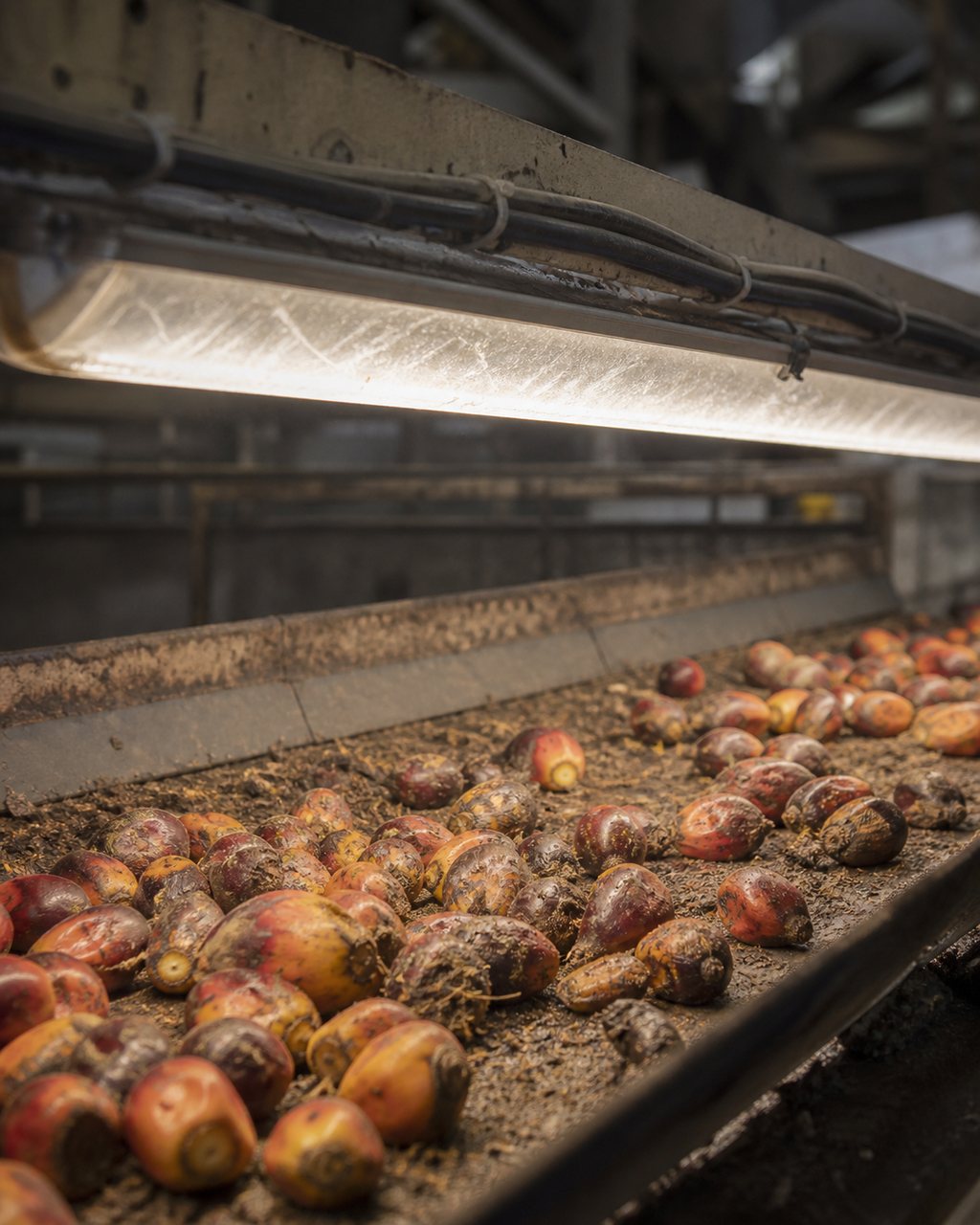
The same light, every bunch
The bar throws hard even light onto the belt, so every bunch is read under the same conditions as the last.
Next step
Two ways in, and neither
of them is a brochure.
A site assessment tells you whether the rig fits your ramp, your weighbridge and your queue.
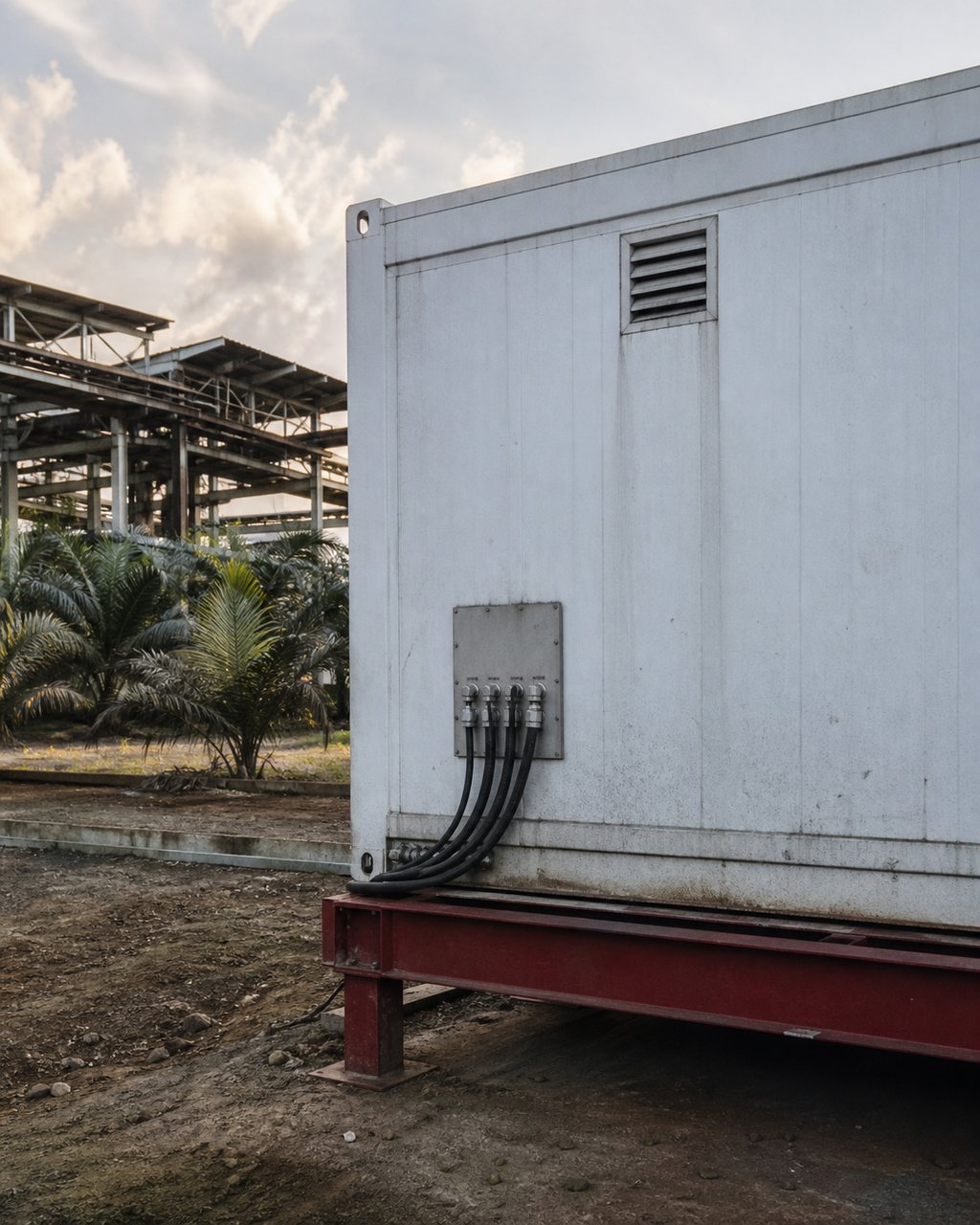
What a visit settles
Ramp geometry, weighbridge wiring, queue length, and what the retrofit has to work around.
Or talk to an engineer now // WhatsApp ↗ // +603-8685 0888